National General Cultural Strike. 12 June.
From Venice to the country. A collective refusal of genocide normalization in culture and the precarious labor it depends on.
From Venice to the country.
On May 8, cultural workers at the Venice Biennale went on strike. Not just artists and curators but installers, educators, technicians, registrars, and art handlers whose labour makes any biennale possible. Together, they made visible what institutions prefer to keep invisible: that culture runs on precarious work, and that precarity is a choice.
To call ourselves cultural workers is a political act. It refuses the fiction that artists float above the conditions of labor and says: we are inside these systems, we can see them clearly, and we will not be used to launder them. The conditions that make cultural work unstable — short contracts, unpaid labour, no benefits, no job security — are the same conditions that allow institutions to look away from genocide. Precarity keeps workers isolated and compliant, and it is what makes artwashing possible. When workers have no power, institutions do as they please, including taking money from arms manufacturers and lending their prestige to those funding the killing of Palestinians.
On June 12, ANGA joins Italian trade unions and cultural organizations in calling for a general cultural strike, taking the movement that began in Venice national. The June 12 Strike is a collective refusal of genocide normalization in culture and of the precarious labor conditions that cultural institutions are built on. These two things are not separate. They are the same architecture. Assemblies and actions are taking place across Italy, in Rome, Venice, Milan, Naples, Turin, Lecce, and Bologna, with around twenty cities currently being organized.
For information and inquiries, visit Vogliamo Tutt’altro and Mi Riconosci.
What we strike for.
The June 12 strike platform — five demands developed alongside Italian trade unions and cultural worker organisations, addressing labor rights, welfare, health, fair pay, and the rejection of arms money in culture.
Valuing Cultural Work
Cultural and creative work must be legally recognised as work, requiring regulation of all professional figures in the sector — employed and self-employed — to end the narrative that treats it as a hobby.
- Regulation of volunteer work and internships so they never substitute paid labour.
- Increased hiring and salaries at the Ministry of Culture and understaffed public administrations.
- Overcoming the contract and concession system established by the Ronchey Law (4/1993) and reinternalisation of cultural services.
- Elimination of false VAT numbers and self-employment as a tool for precarity, with stronger Labour Inspectorate enforcement.
- Stabilisation of precarious employment in research, and recognition of research and training as work.
- Repeal of Law 182/2015, which classifies the opening and surveillance of cultural venues as an essential public service — a provision designed exclusively to restrict the right to strike.
Fair Work, Fair Pay
The right to adequate remuneration is enshrined in Article 36 of the Constitution, yet cultural workers are routinely paid below the dignity threshold through misclassification, incomplete contracts, and wage dumping enabled by the Ronchey Law’s subcontracting system.
- A legal minimum wage applicable to all.
- A guarantee that freelance and atypical work costs more for employers than employed work.
- Implementation of the most representative and favorable sector-specific national collective labour agreements (CCNL), and an end to wage dumping through unprotected CCNLs.
- Renewal of expired CCNLs with wages adjusted to the current cost of living and inflation.
- Fair, transparent criteria for allocating ministerial funds to theaters, foundations, and artistic institutions, aligned with ISTAT codes and contractual renewals.
Whole-Person Health
Precarious conditions, job insecurity, gender inequality, and workplace isolation put the psychological and physical health of cultural workers at serious risk.
- Safety on all worksites and training centers, with clients held responsible for contracted workers.
- Effective training, prevention protocols, and ongoing monitoring of work-related stress.
- Elimination of all forms of discrimination, harassment, and violence in the workplace.
- Activation of psychological counseling and support services to address mobbing and burnout.
Universal Welfare
The culture sector has long been a testing ground for precarity and rights erosion. Regressive measures — including the elimination of basic income, restrictions on NASPI, and an inadequate severance measure for entertainment workers — have worsened an already fragile situation.
- Effective and ongoing income support for all precarious and intermittent workers, with a view toward a universal basic income.
- Universal parental benefits.
- Access to sickness and injury benefits for all.
- A survival pension for all, with provisions for reunifying contributions paid across different funds due to contractual heterogeneity.
No Arms Money, No Artwashing
Increased military spending comes directly at the expense of wages, rights, and resources for culture, education, and welfare. Cultural institutions are being used to normalise policies of war, colonisation, and occupation through the language of art and institutional neutrality.
- An end to the use of cultural institutions as tools for legitimising violations of international law.
- Rejection of art-washing practices that use the language of art to normalise war and occupation.
- Full protection of cultural workers’ right to express dissent and mobilise against the war economy.
The largest strike in Biennale history.
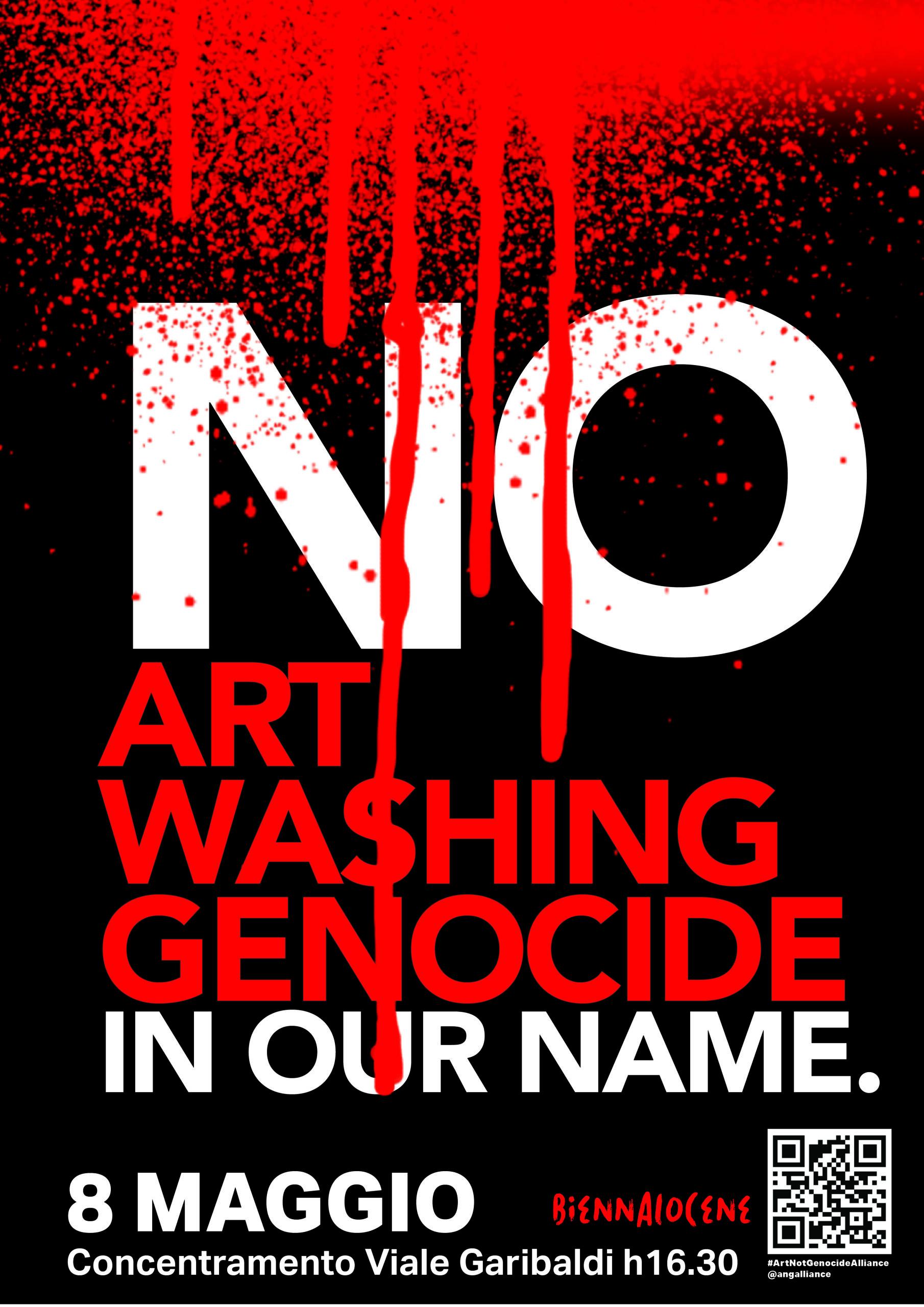
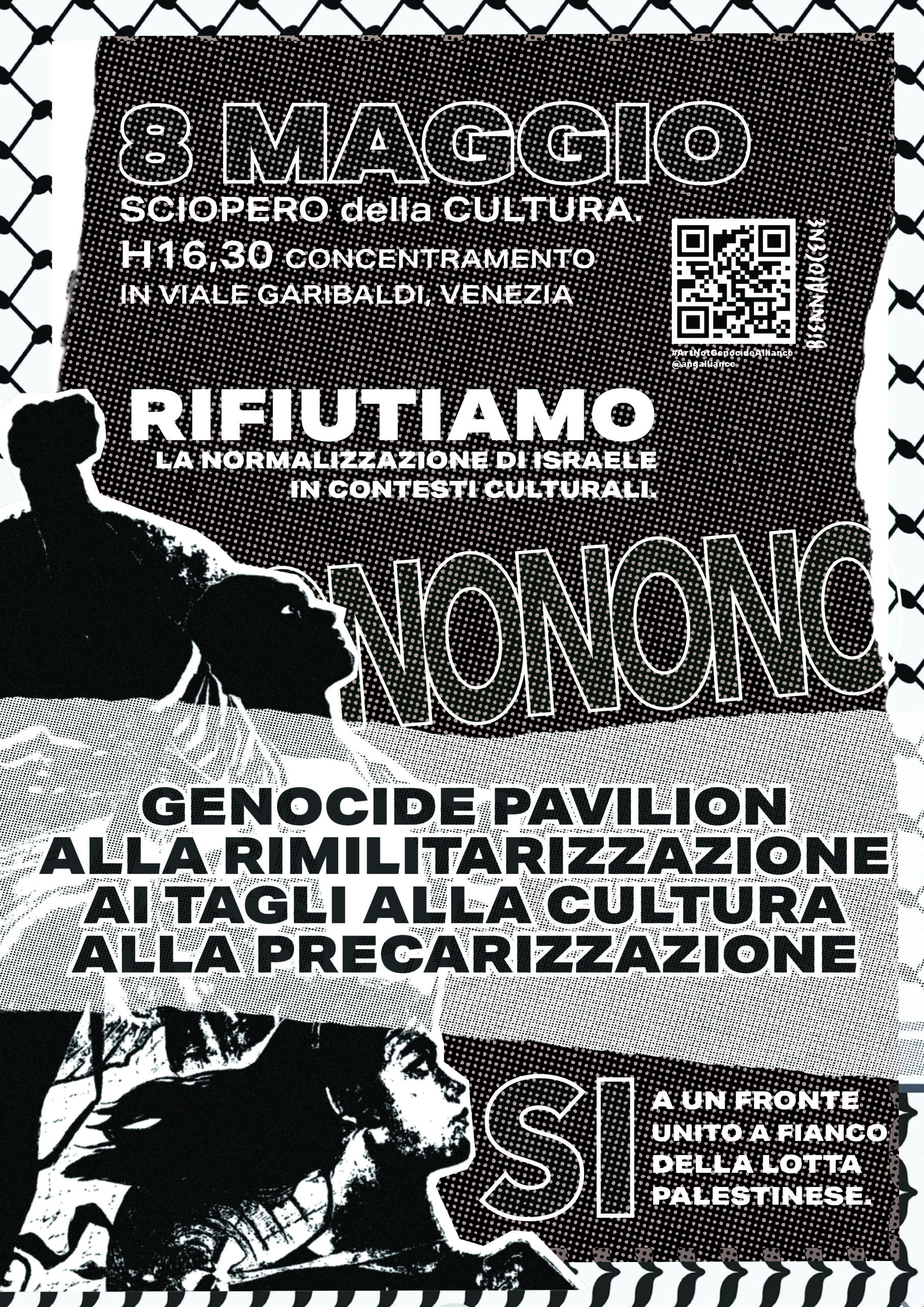
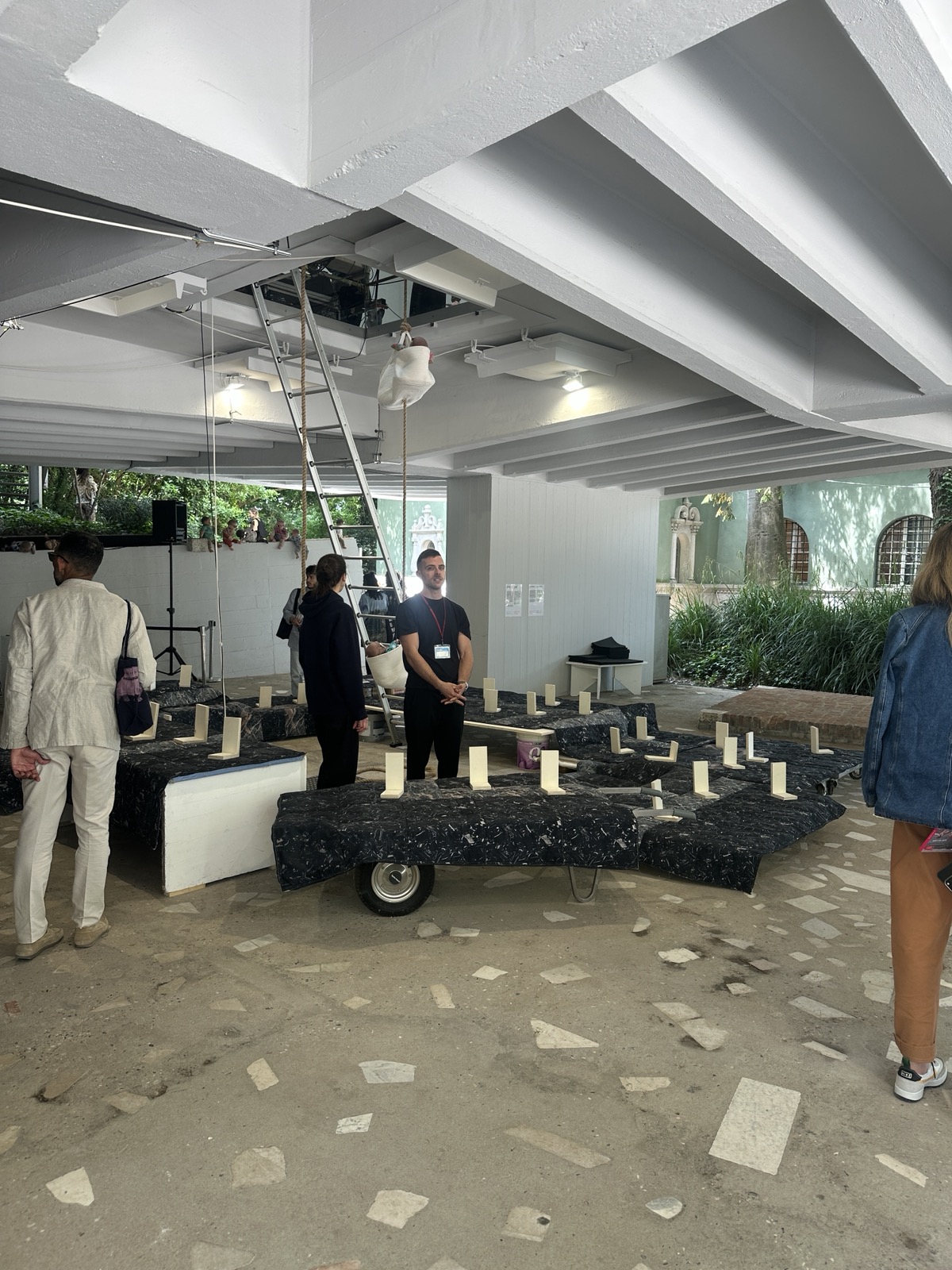
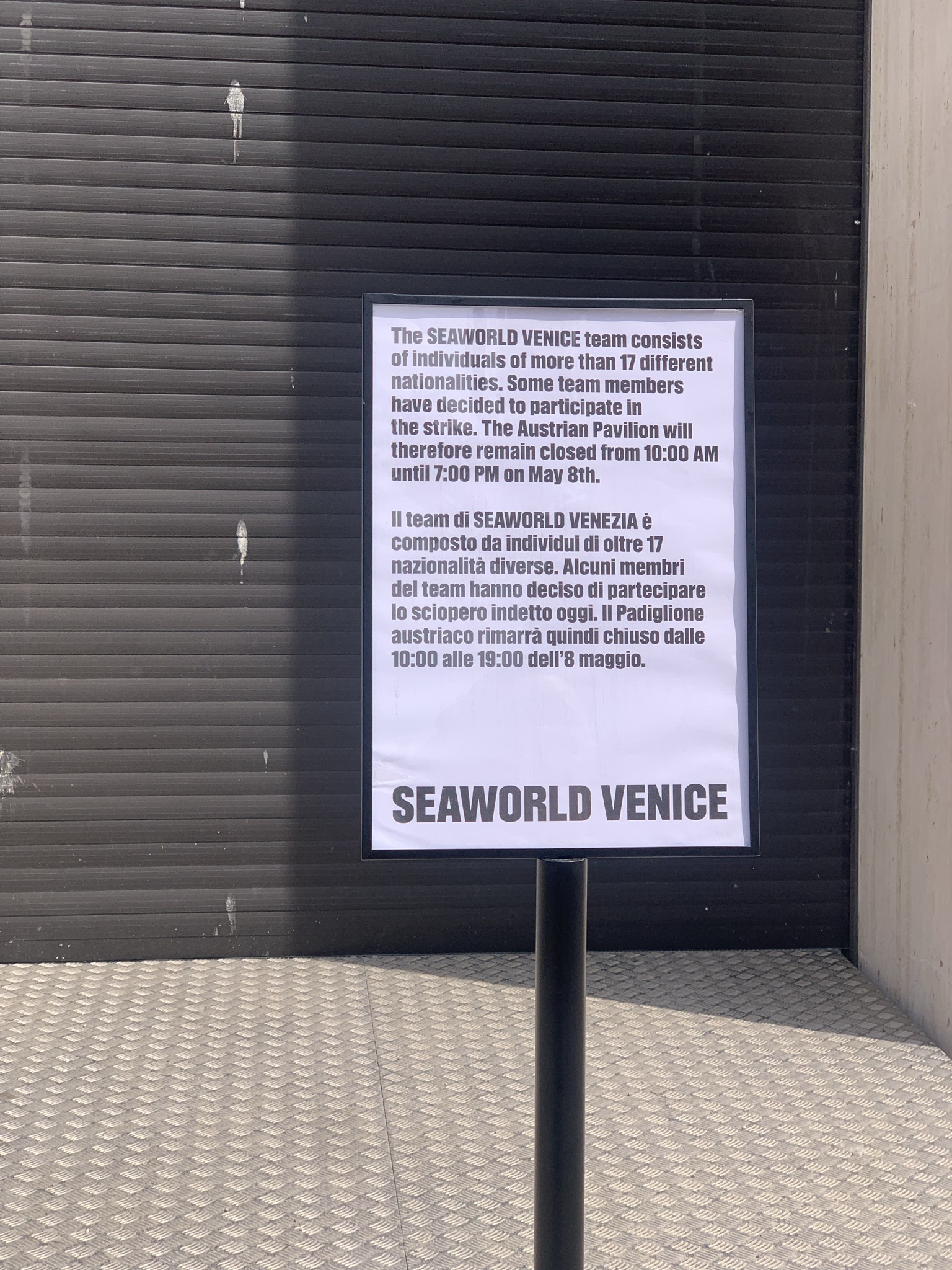
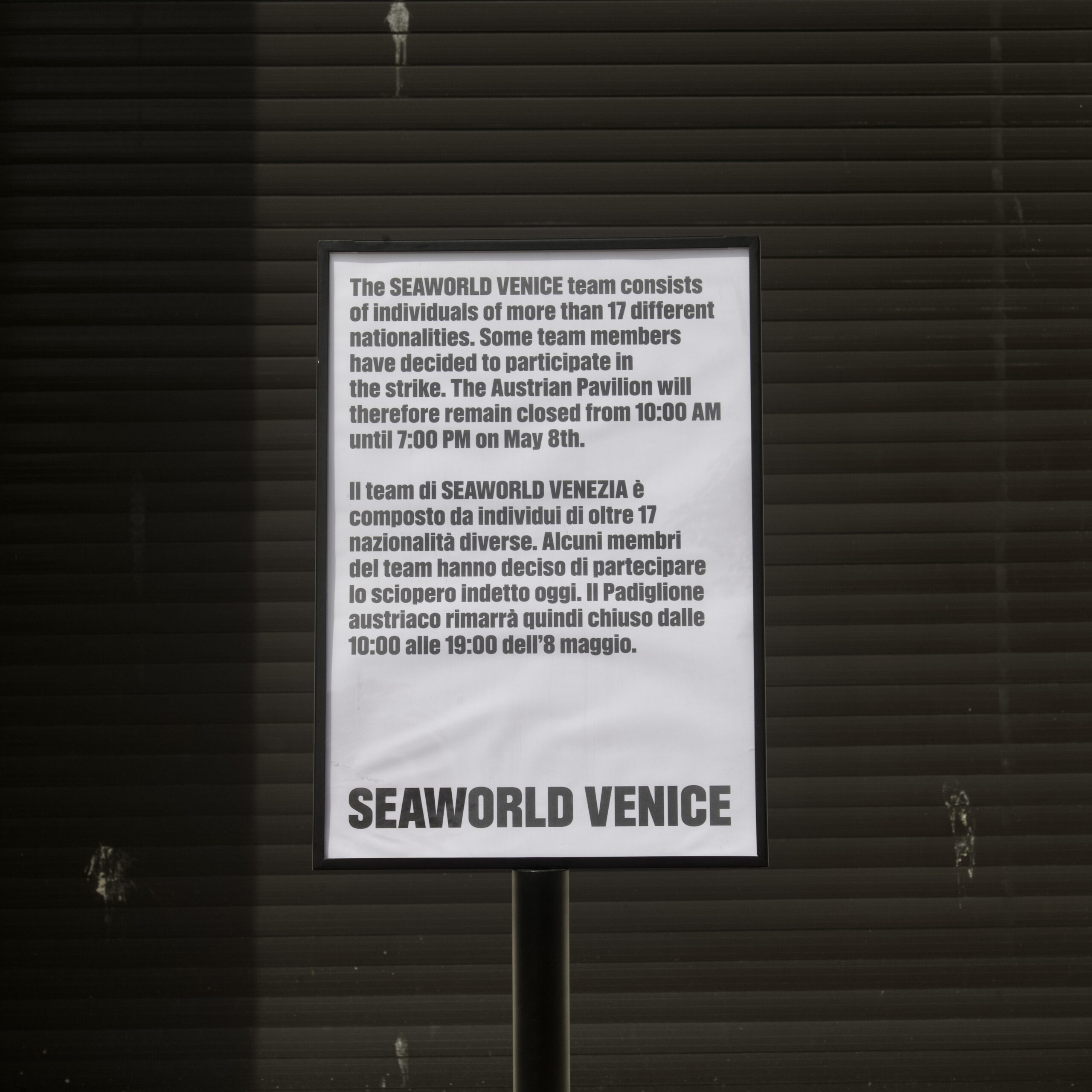
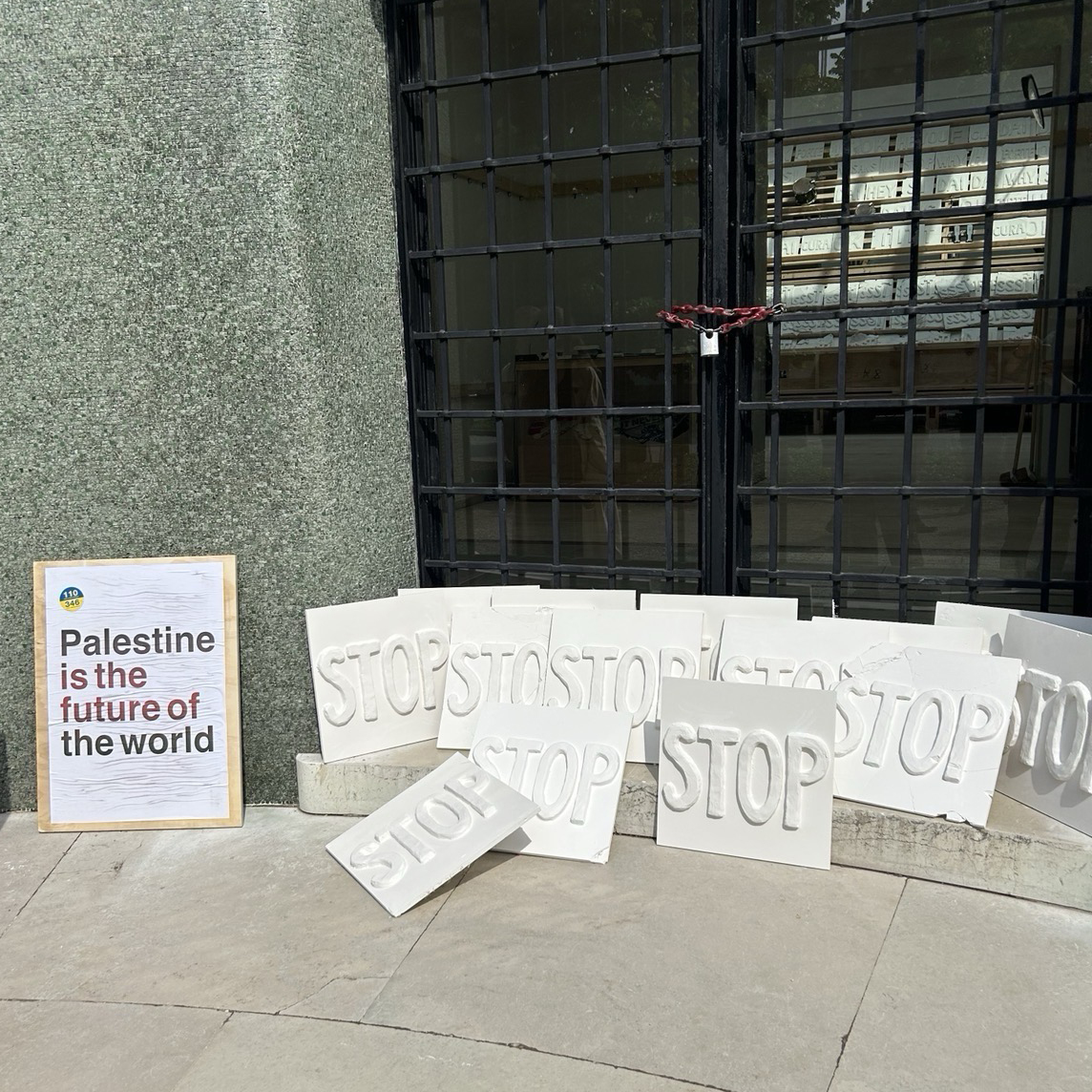
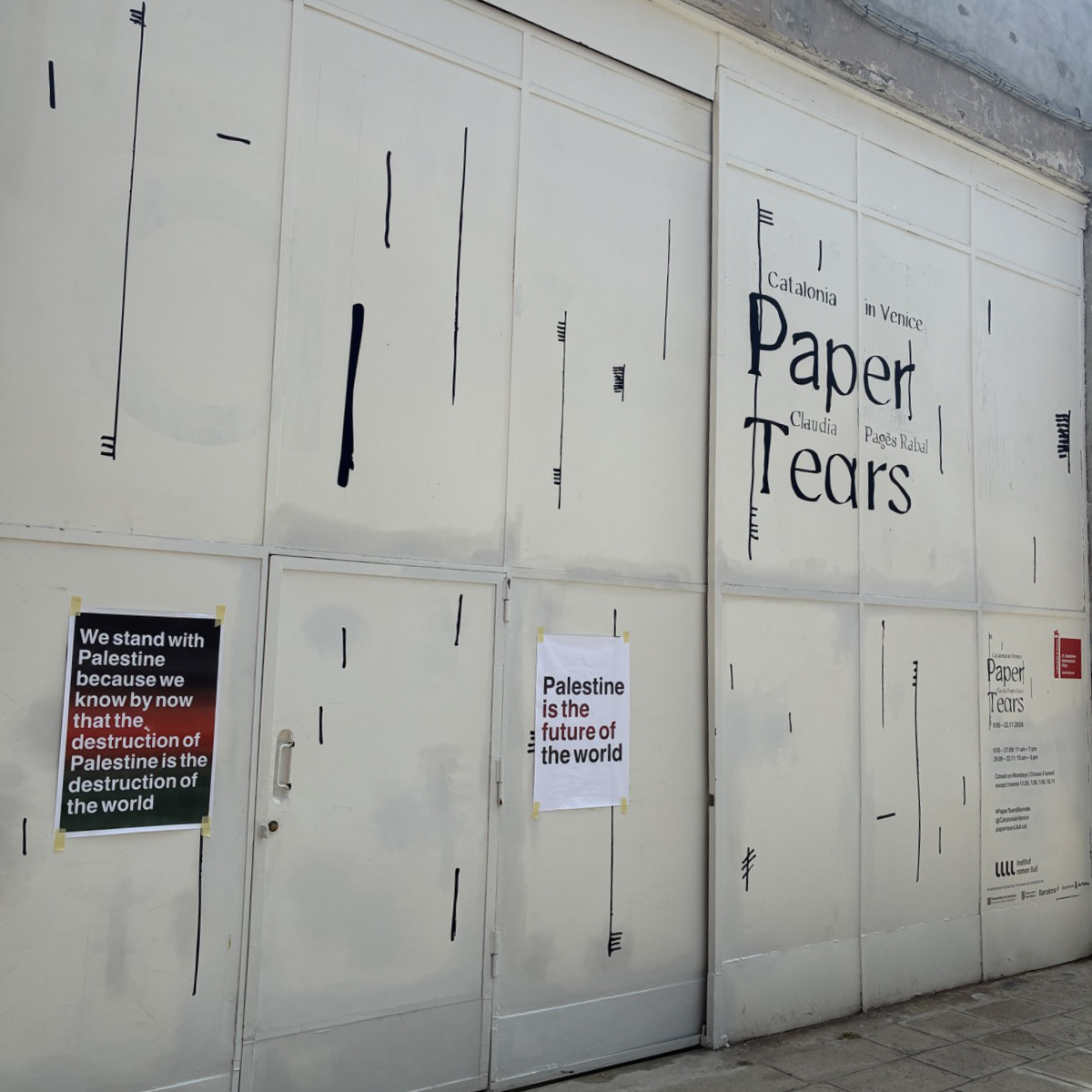
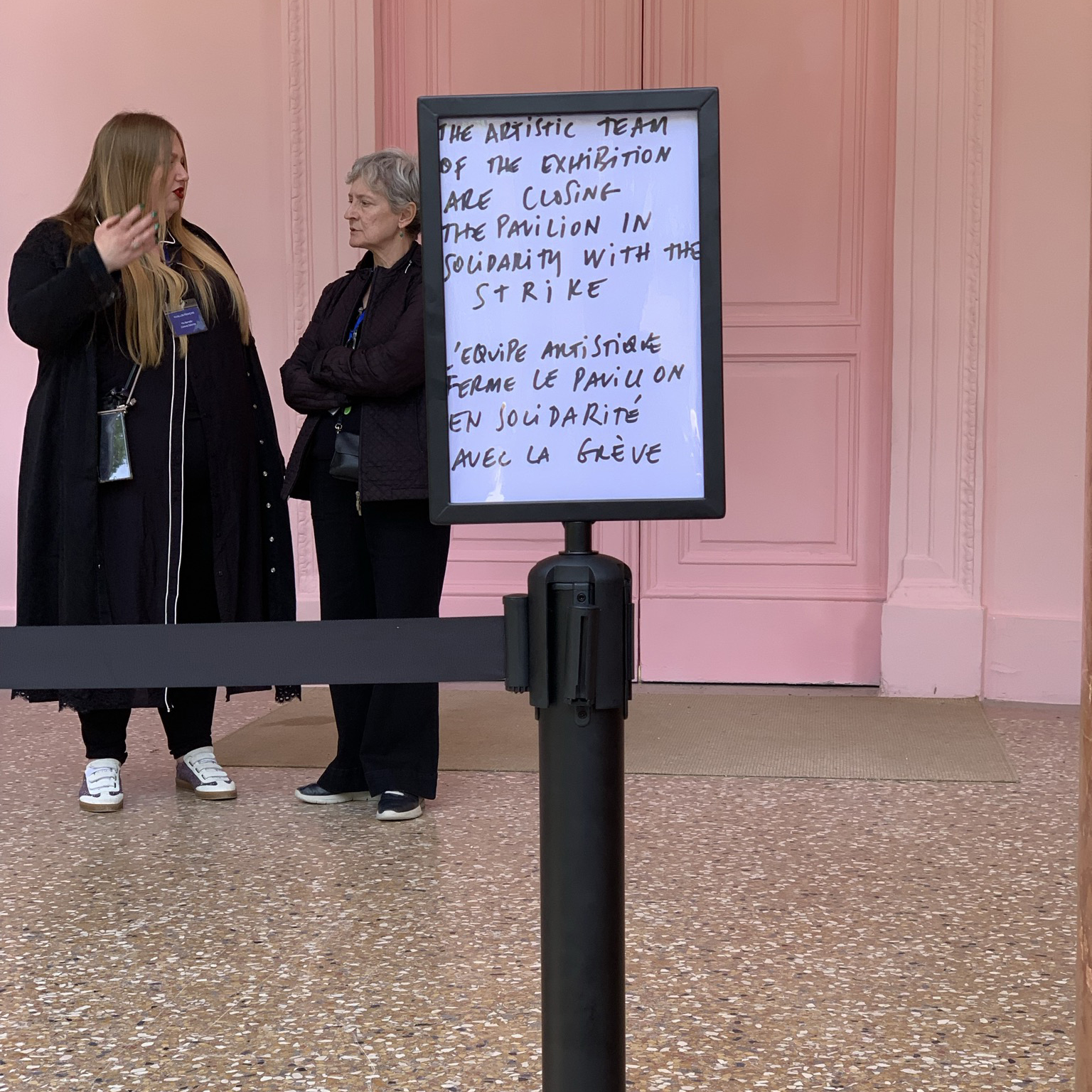
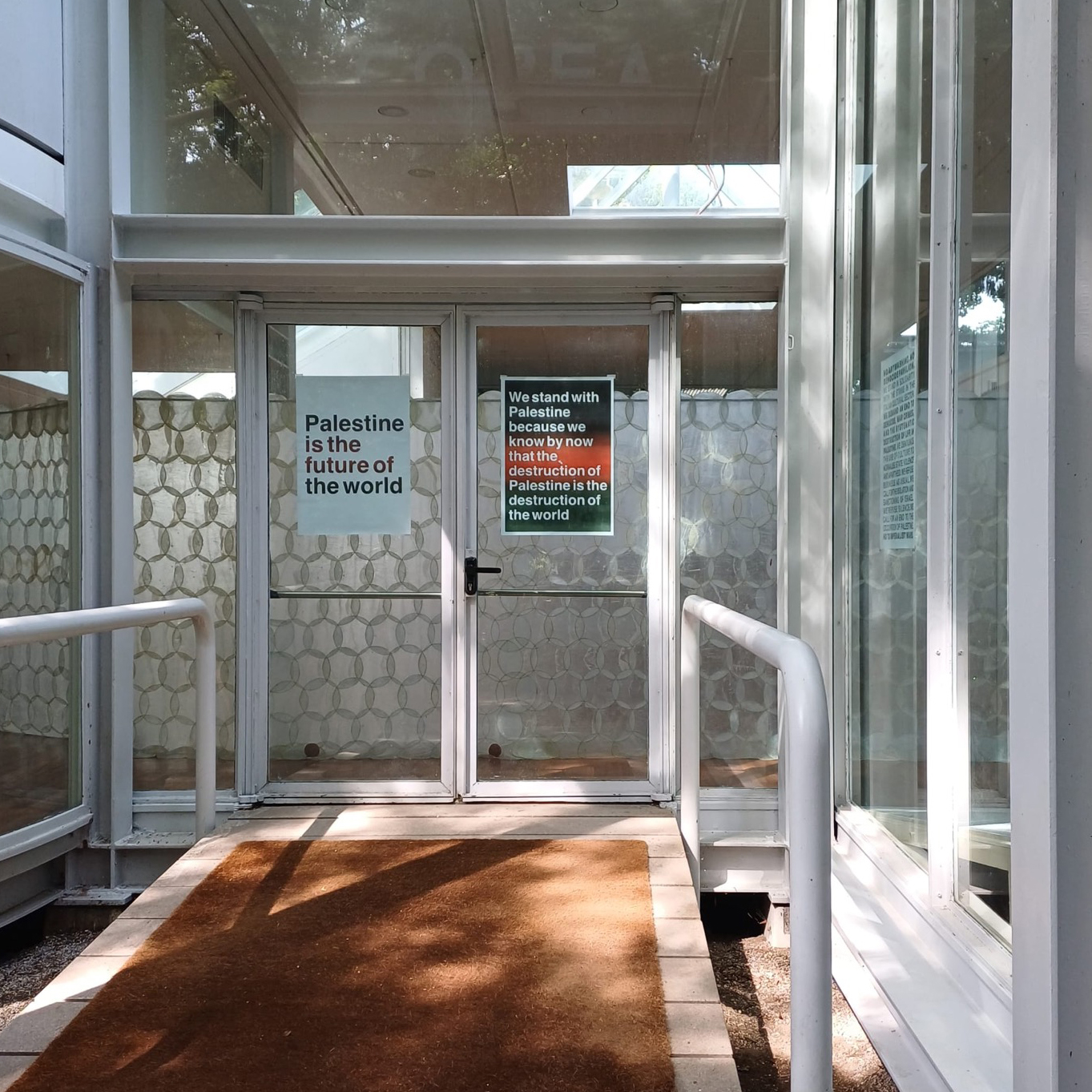
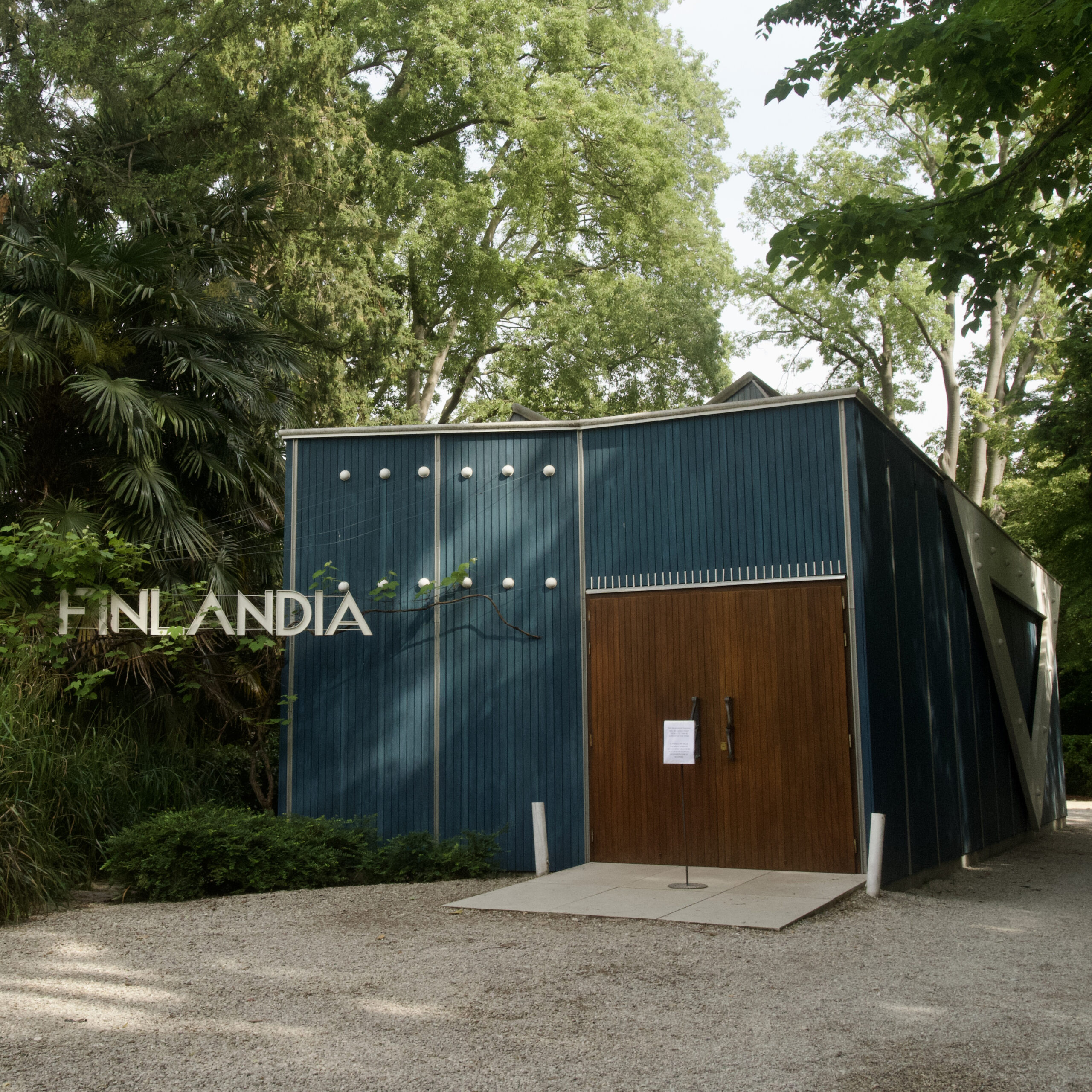
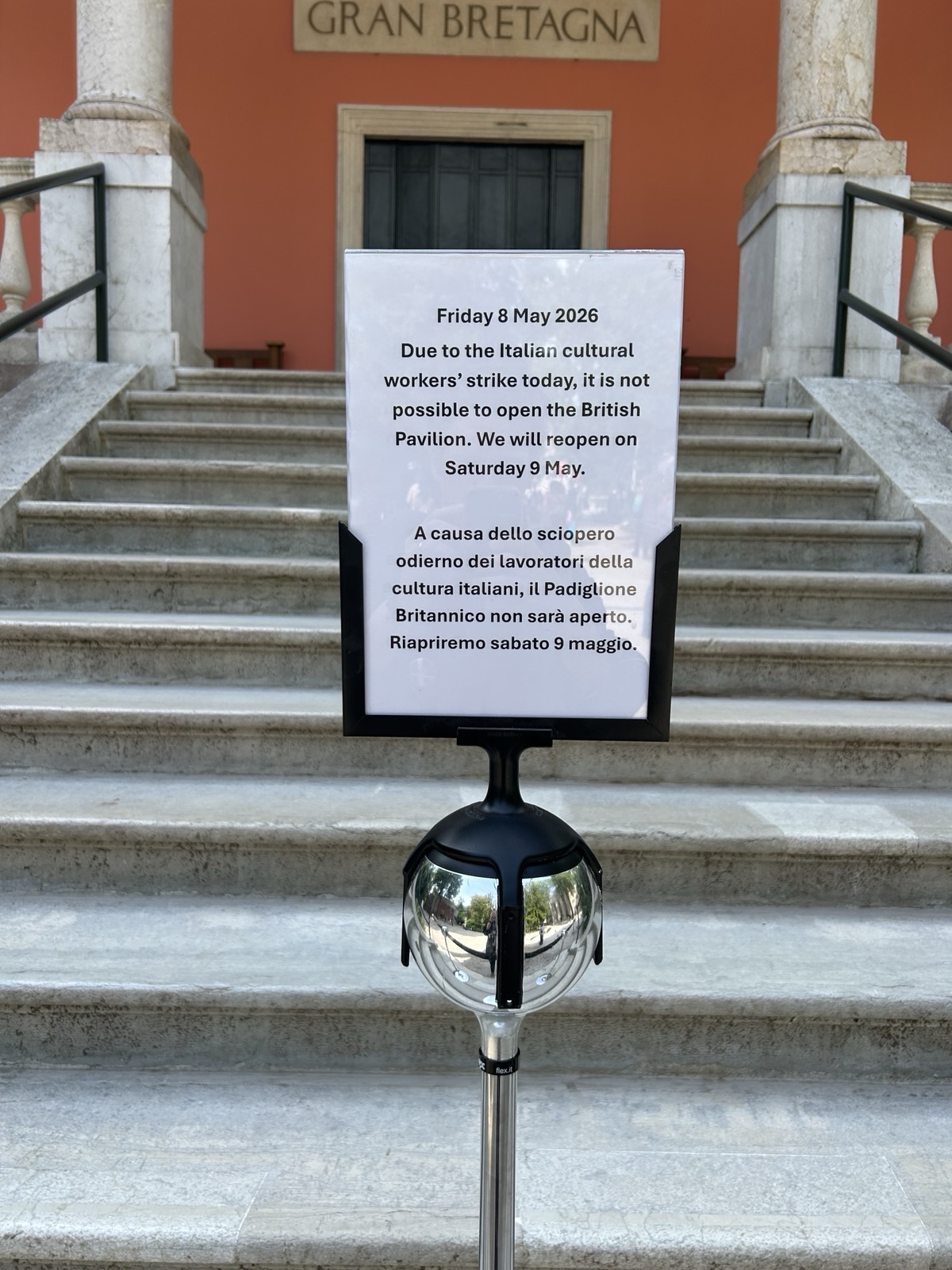
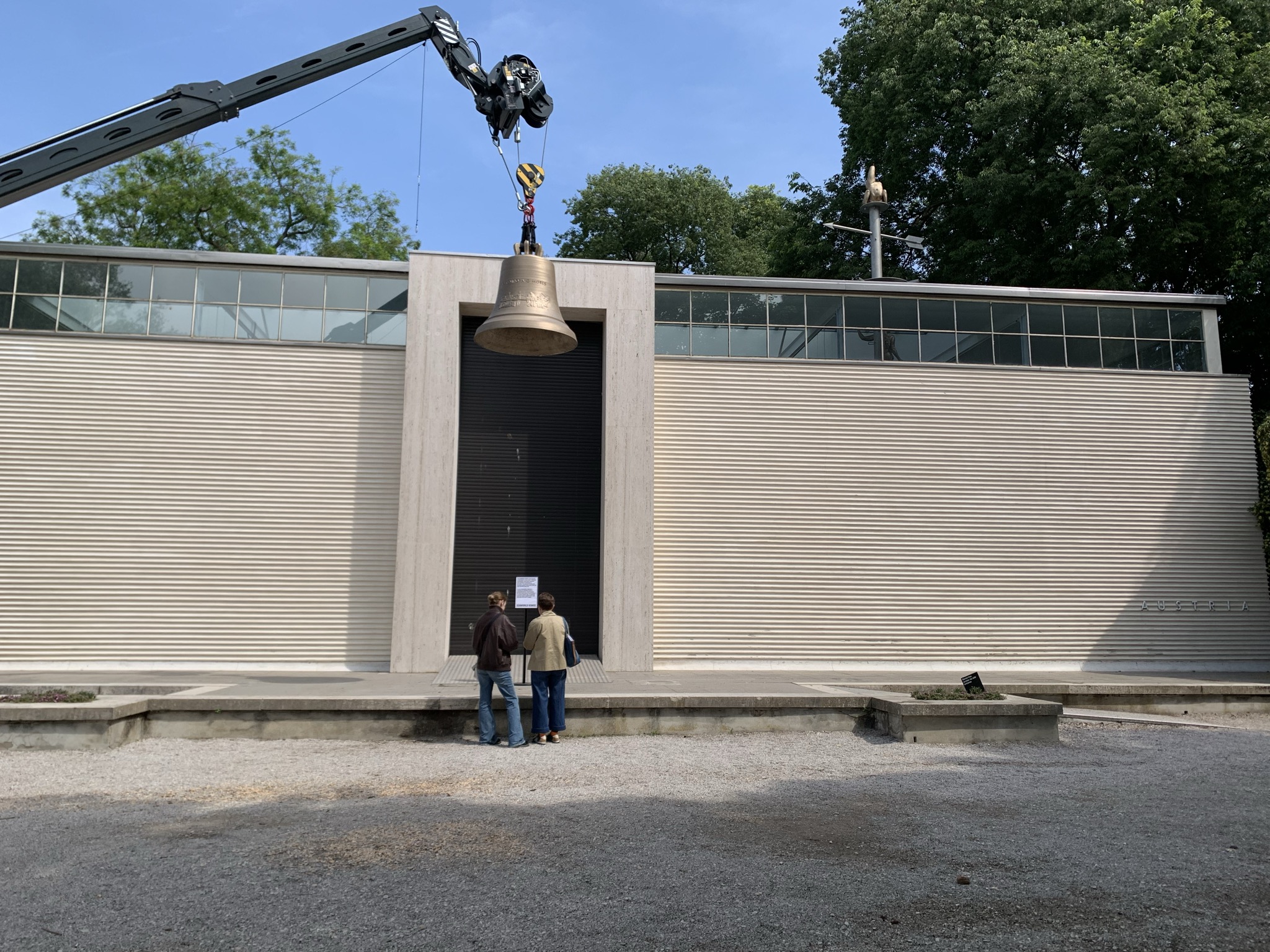
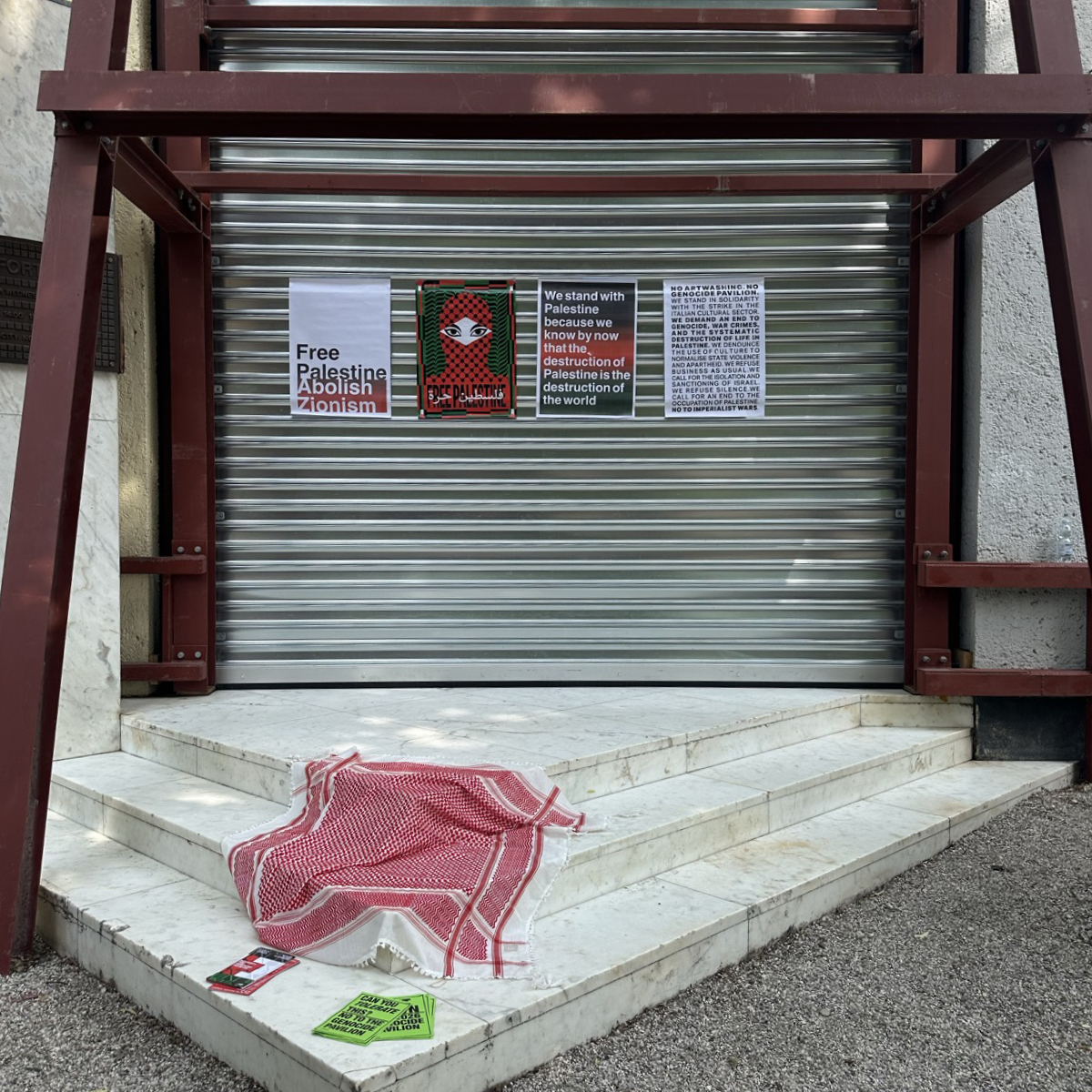
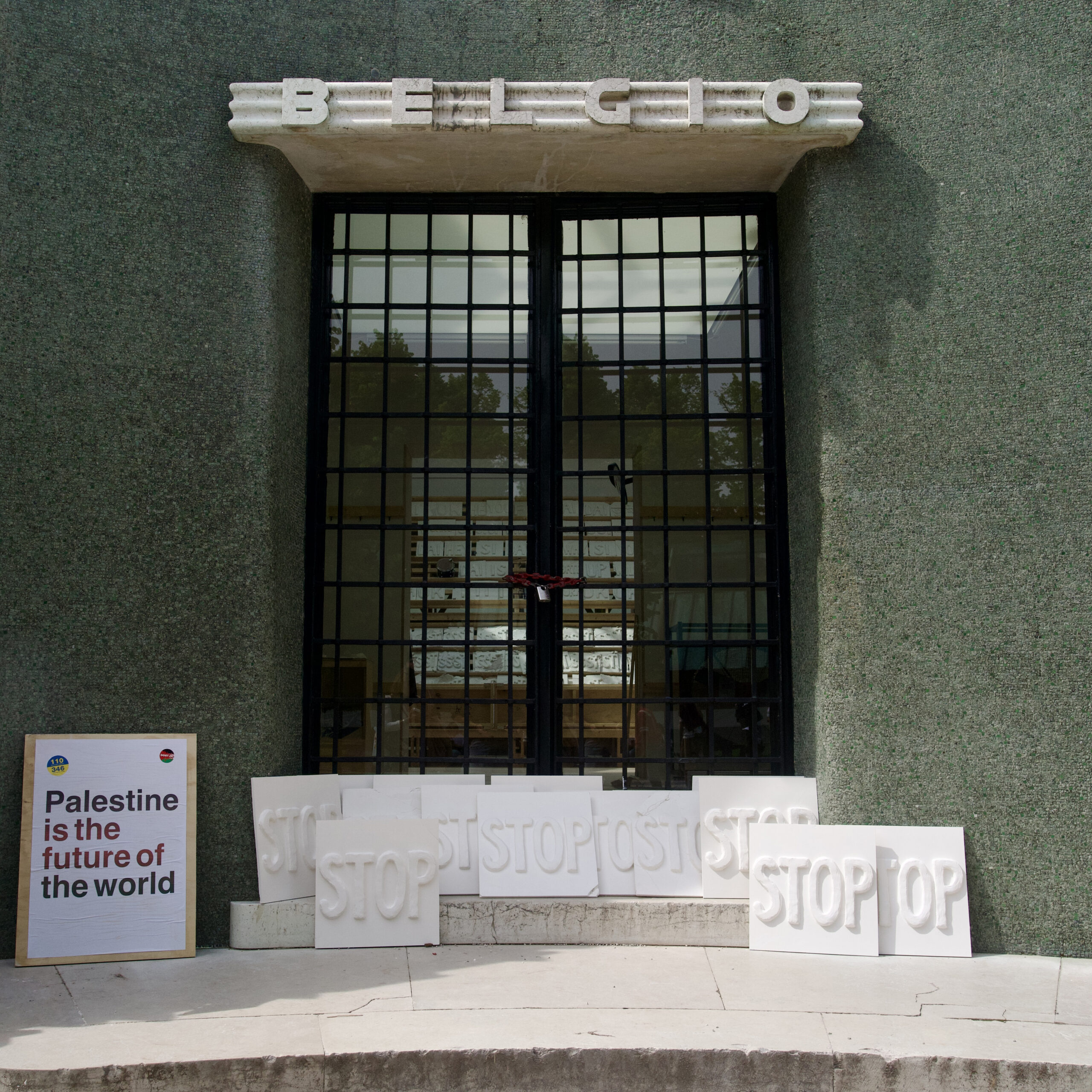
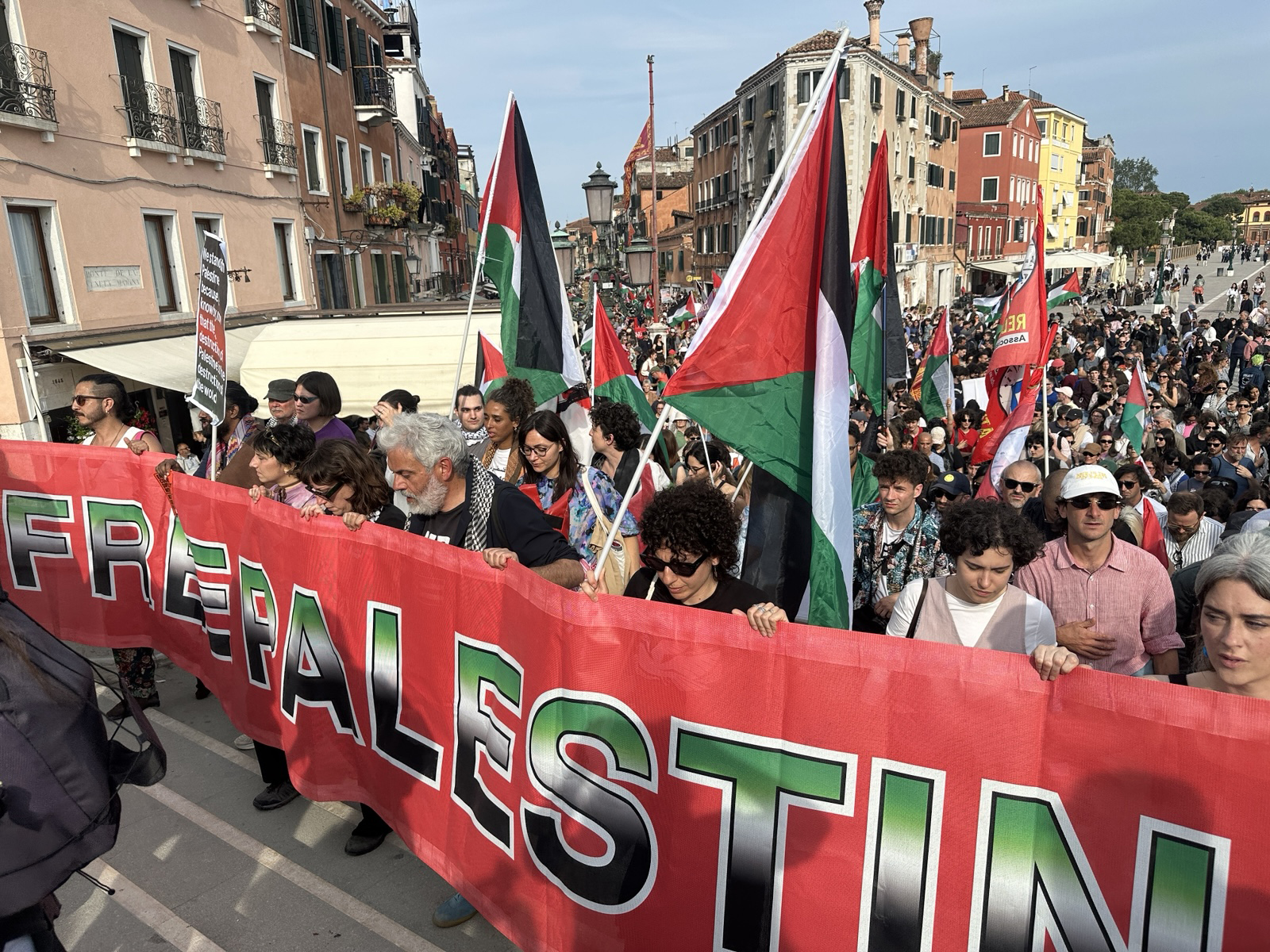
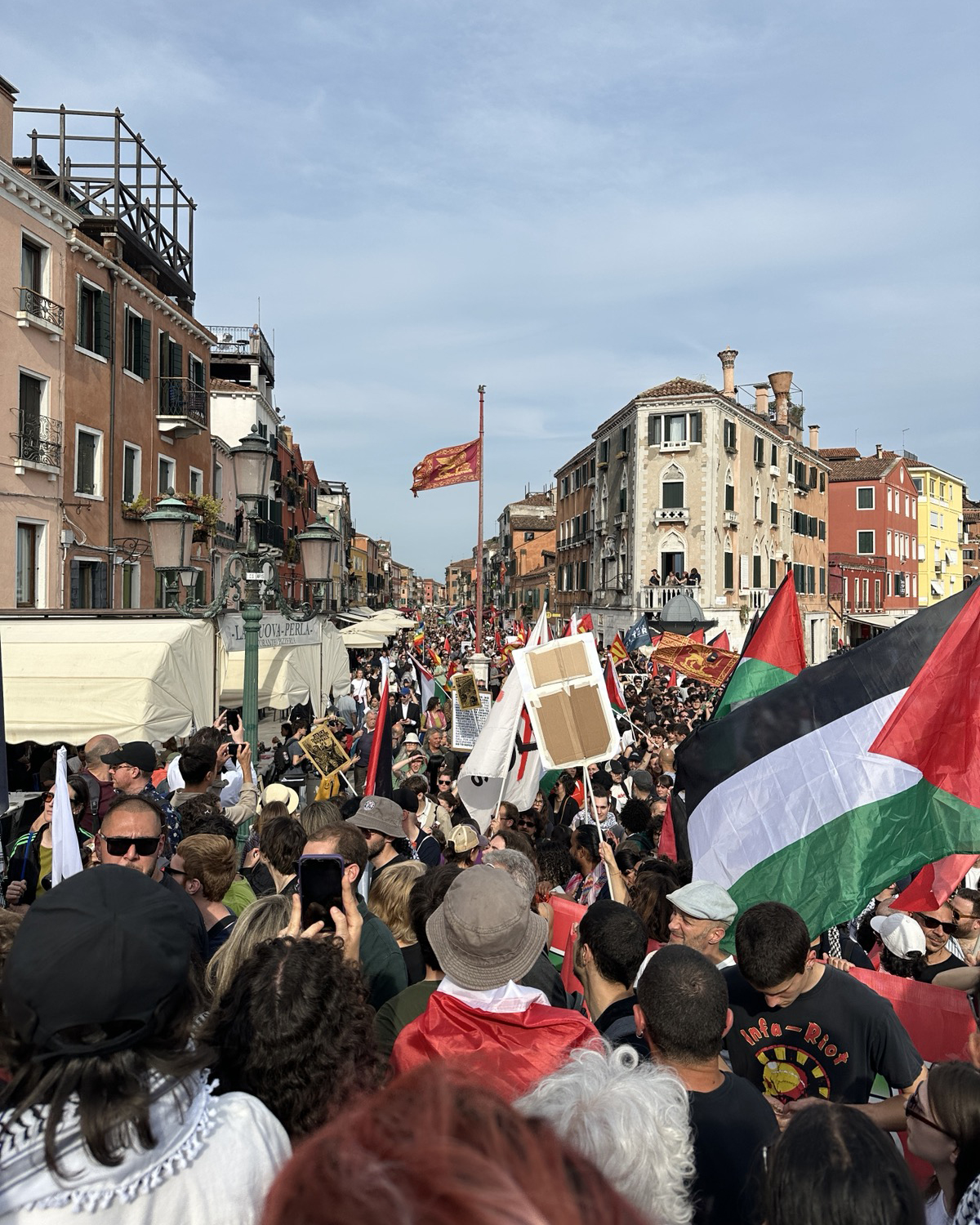
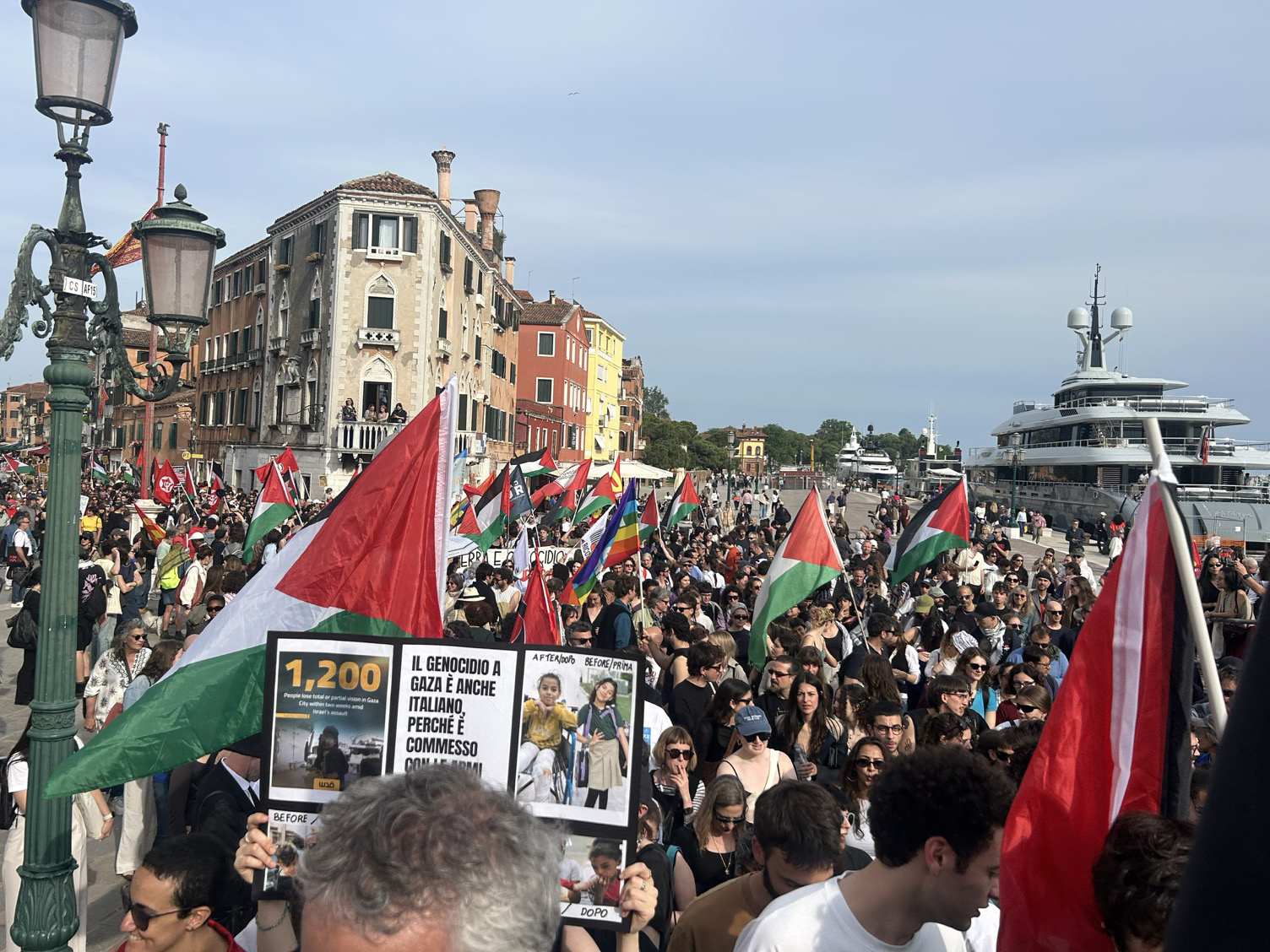
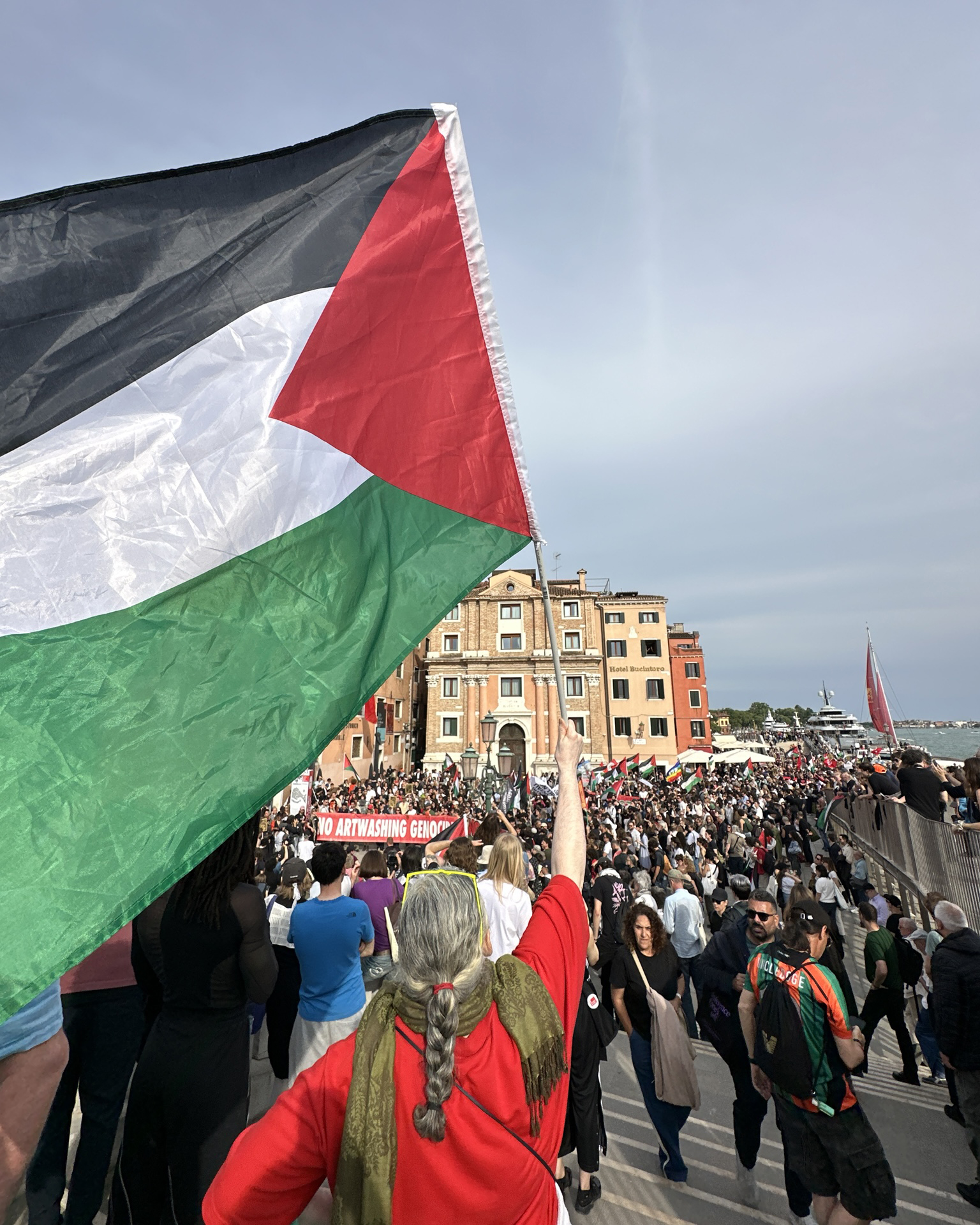
On May 8, a 24-hour strike for Palestine and workers’ rights followed the delivery of the ANGA letter and the Biennale’s silence. Across Venice, national pavilions closed, artists altered or draped works, and thousands marched from Via Garibaldi to the Arsenale.
Thirty of the Biennale’s 100 national pavilions partially or fully shut down, while artists in the main exhibition draped and altered their works. The demonstration at 4:30 PM carried Palestinian flags and banners through Venice as Radio Alhara broadcast live from the ground.
The march effectively blocked the main entrance to the Arsenale that afternoon and spanned the distance between Giardini and Arsenale. Artist Gabrielle Goliath spoke to the crowd about the cancellation and relocation of Elegy, while Gazan artist Mohammed Joha addressed what it costs to make art while the world refuses to look.
The action was called by ANGA, Biennalocene, Sale Docks, Mi Riconosci?, Vogliamo Tutt’altro, local grassroots organisations, and Italian trade unions including ADL Cobas, USB, and CUB.
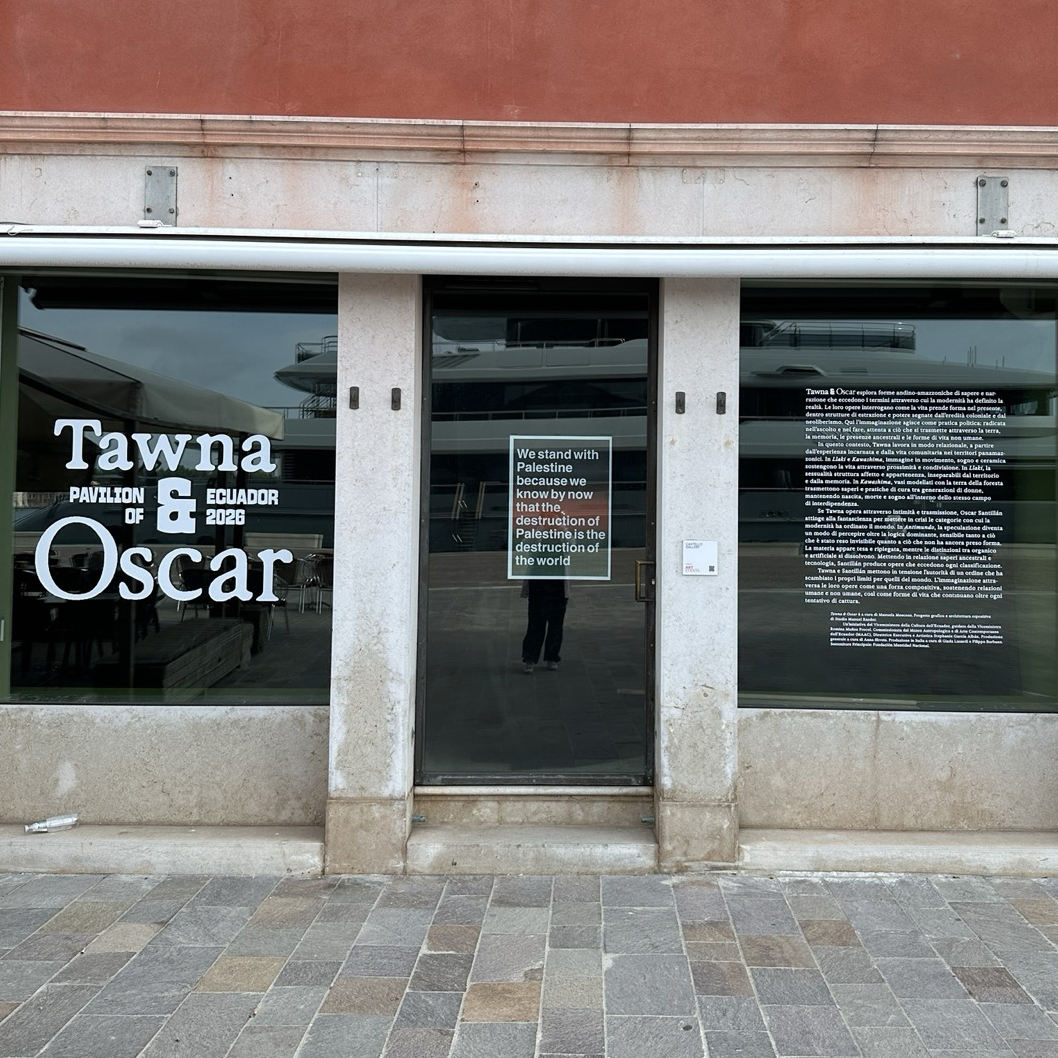
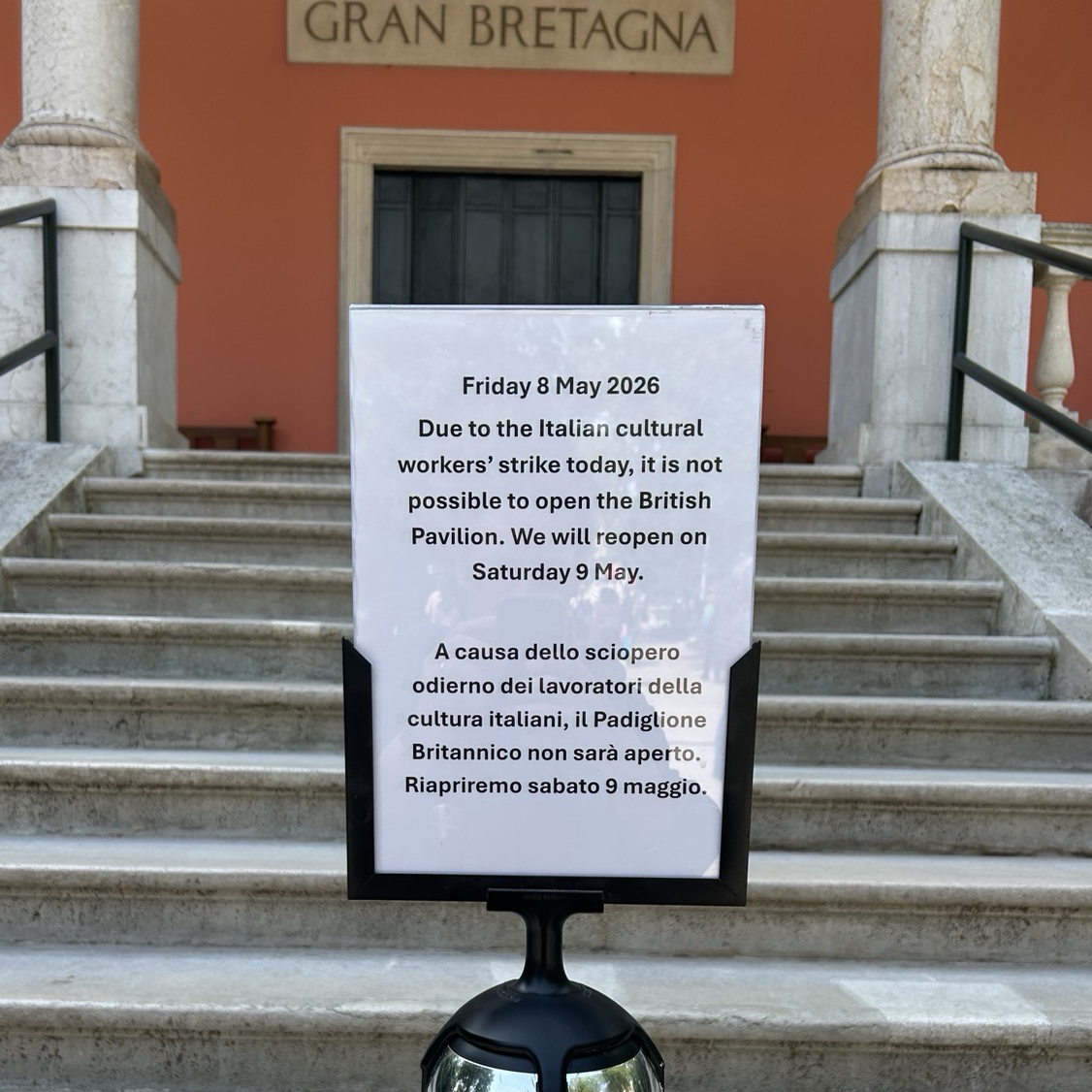
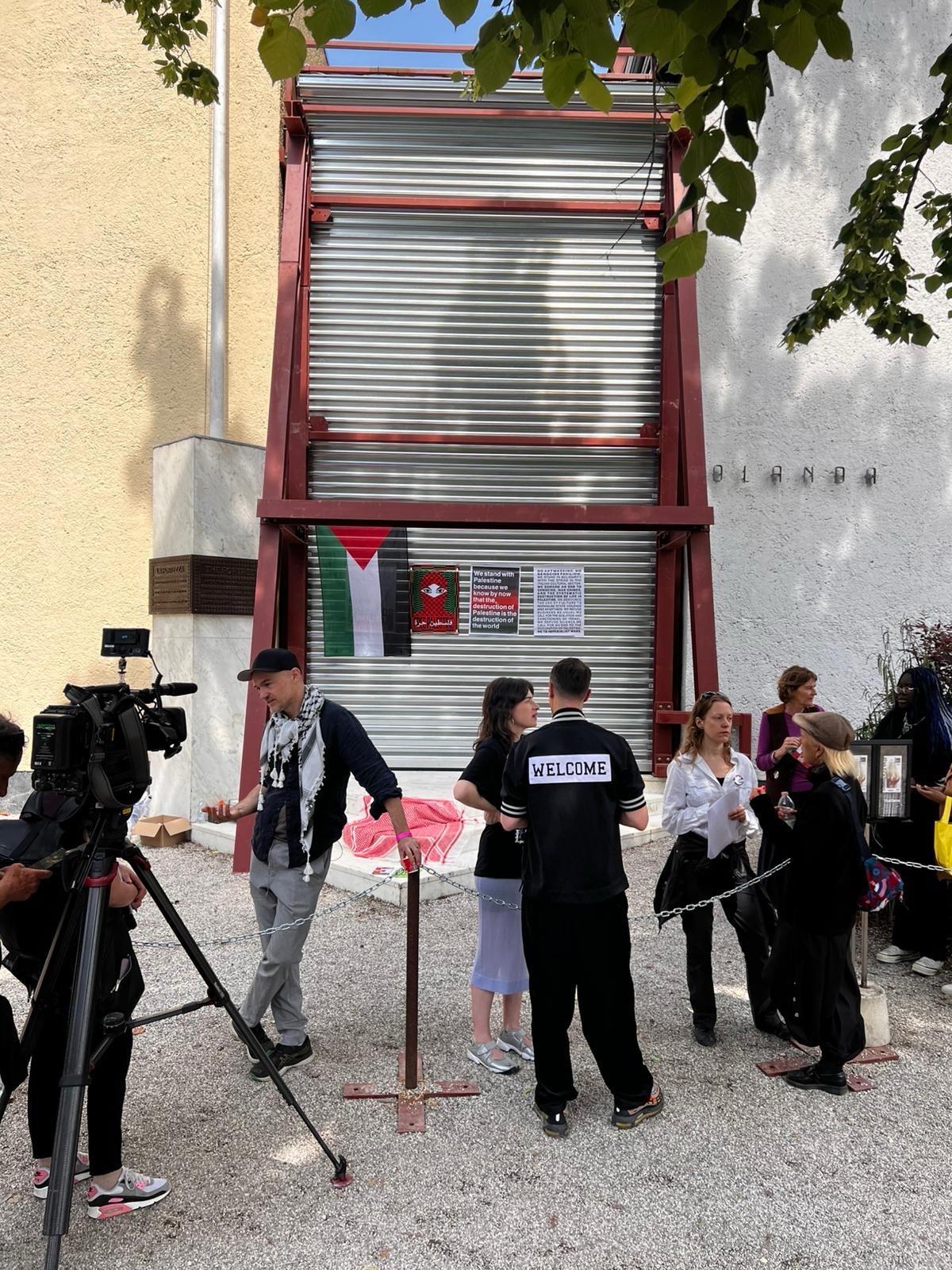
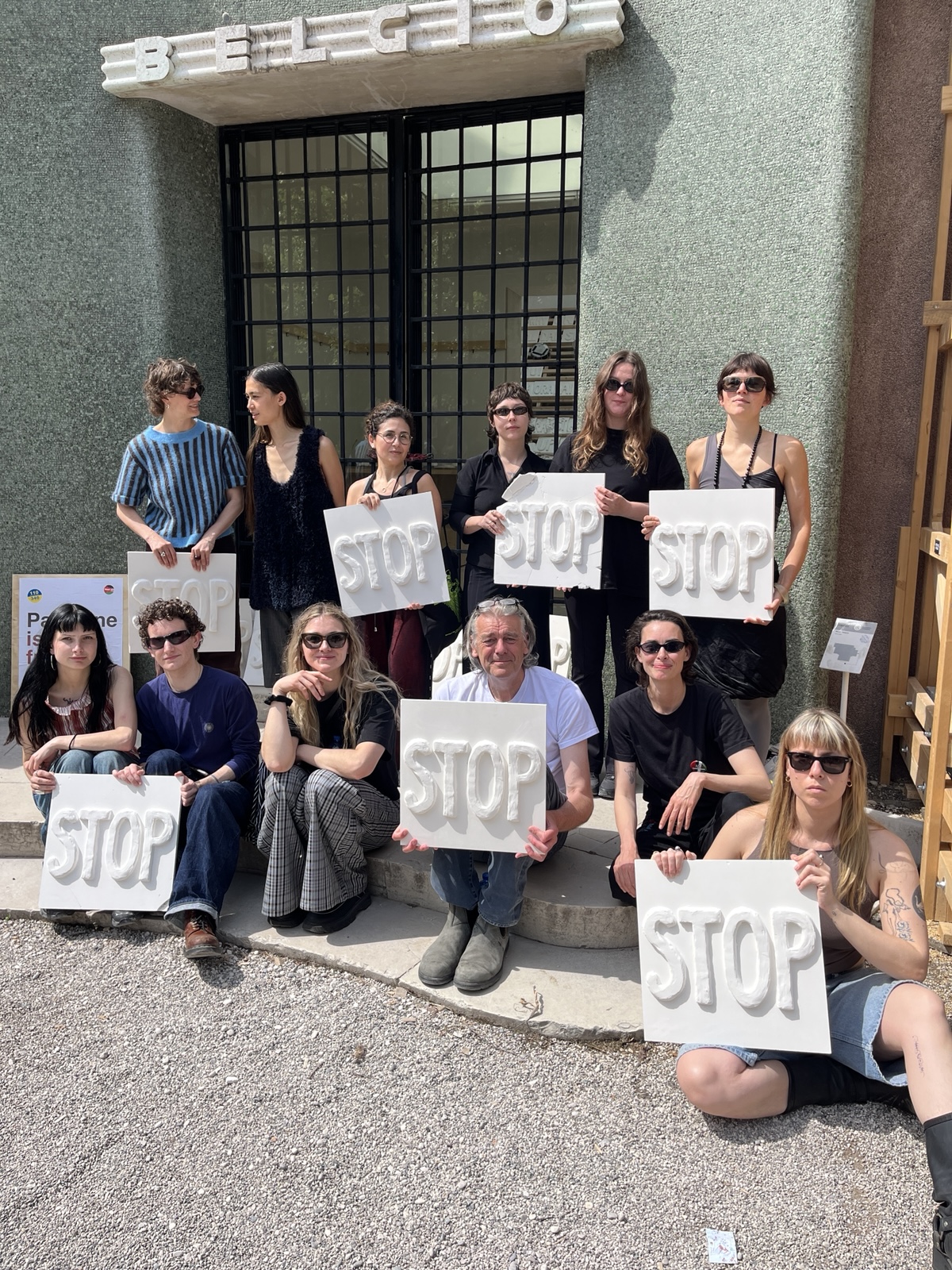
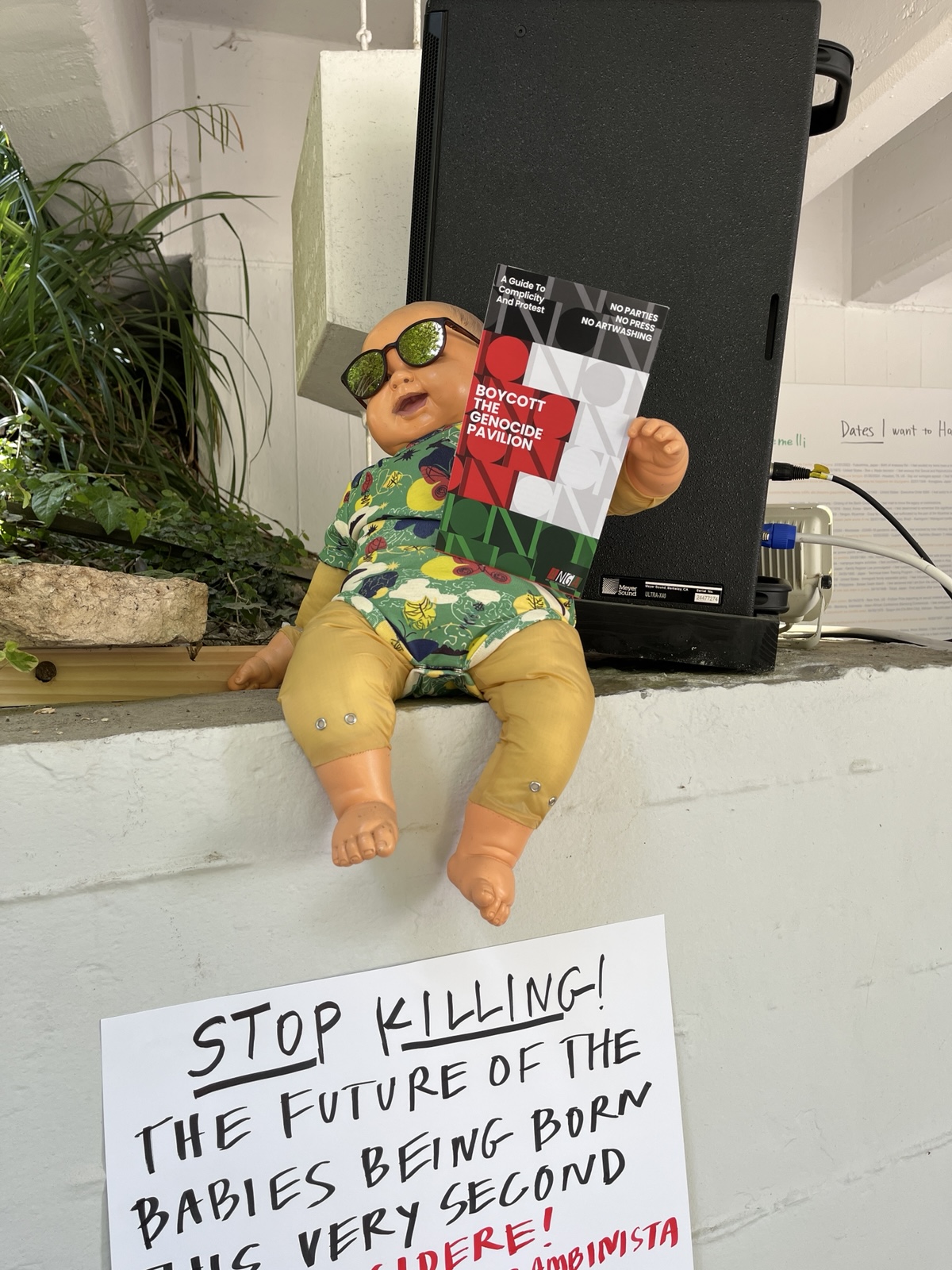
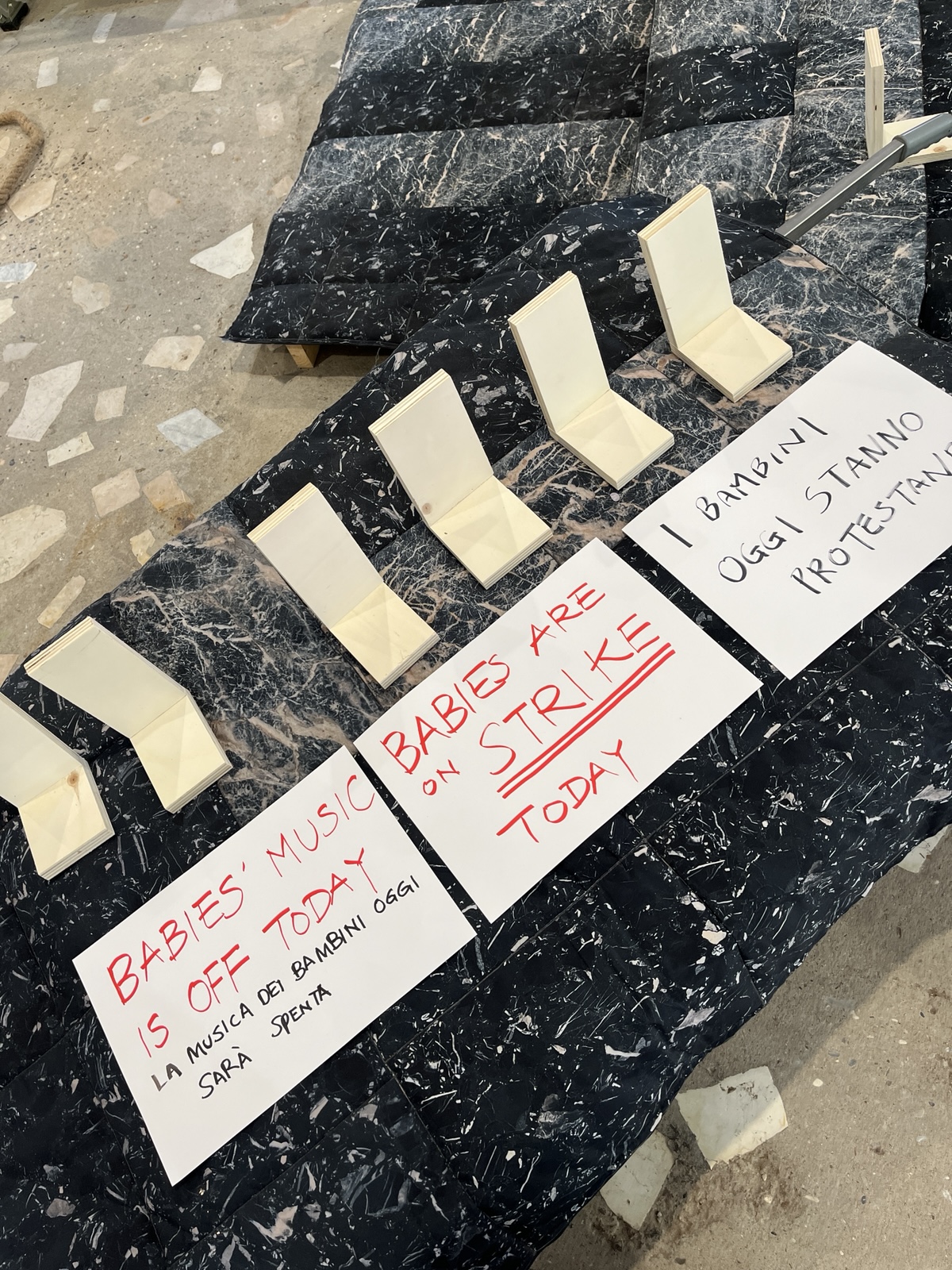
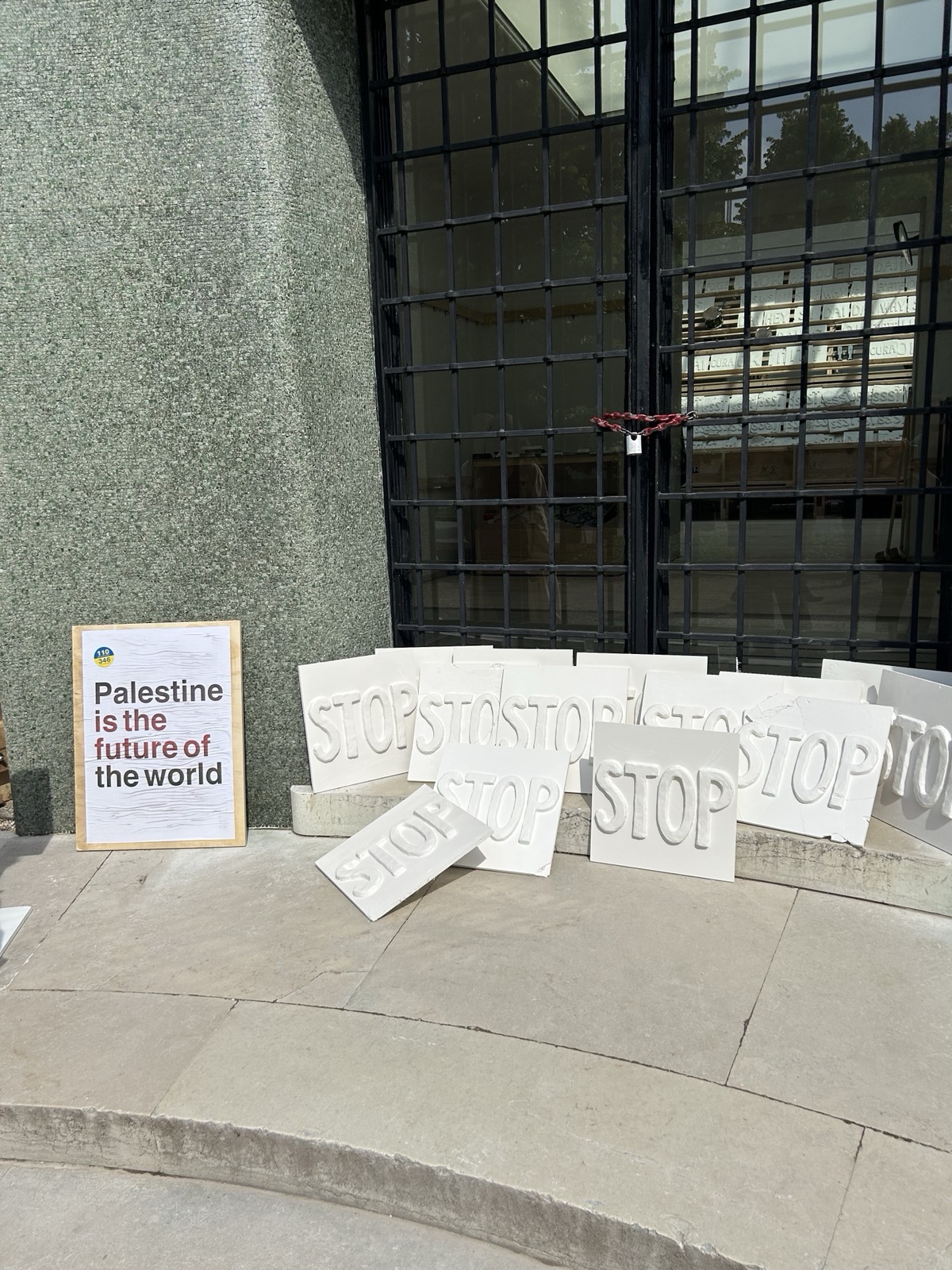
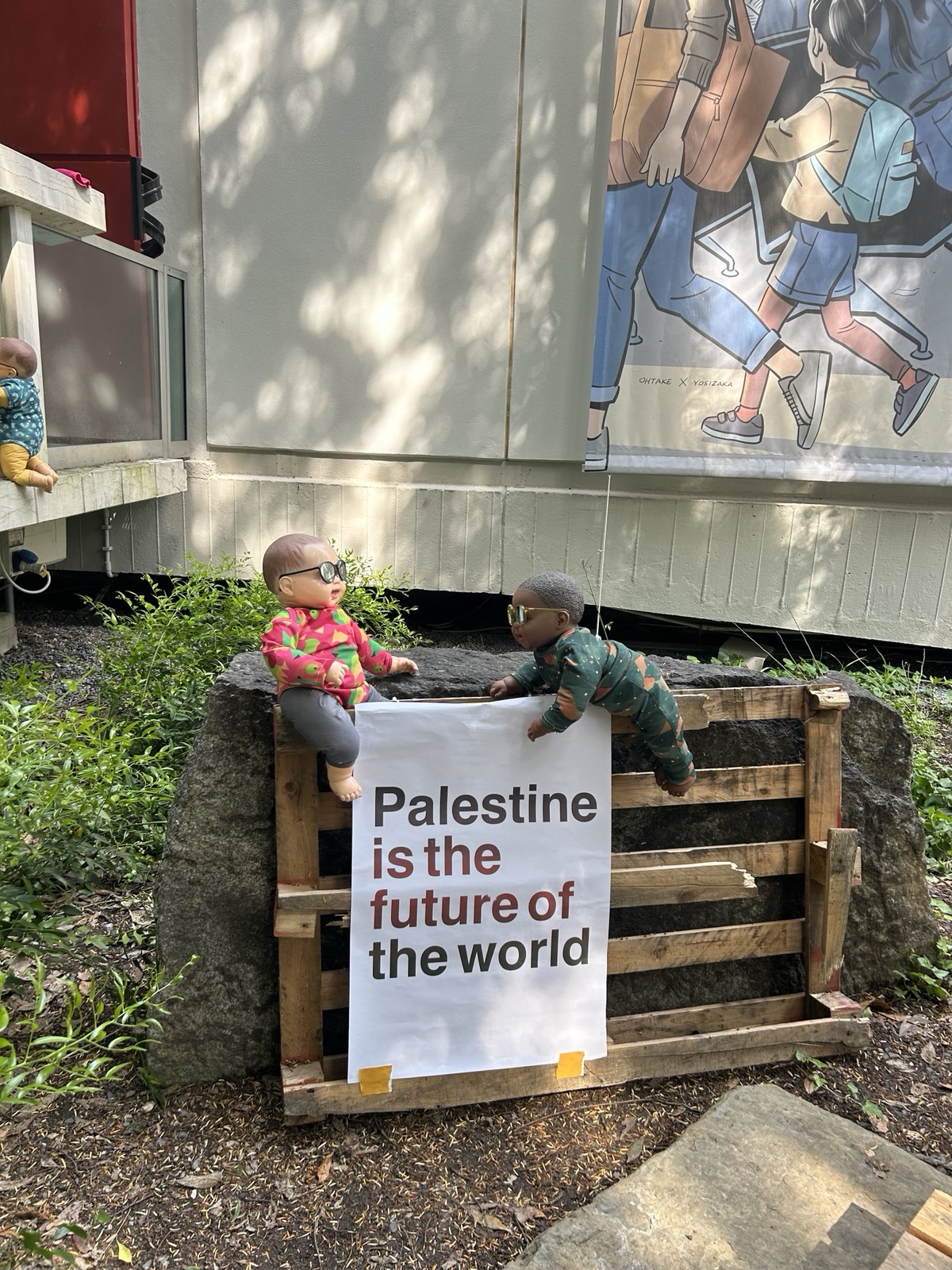
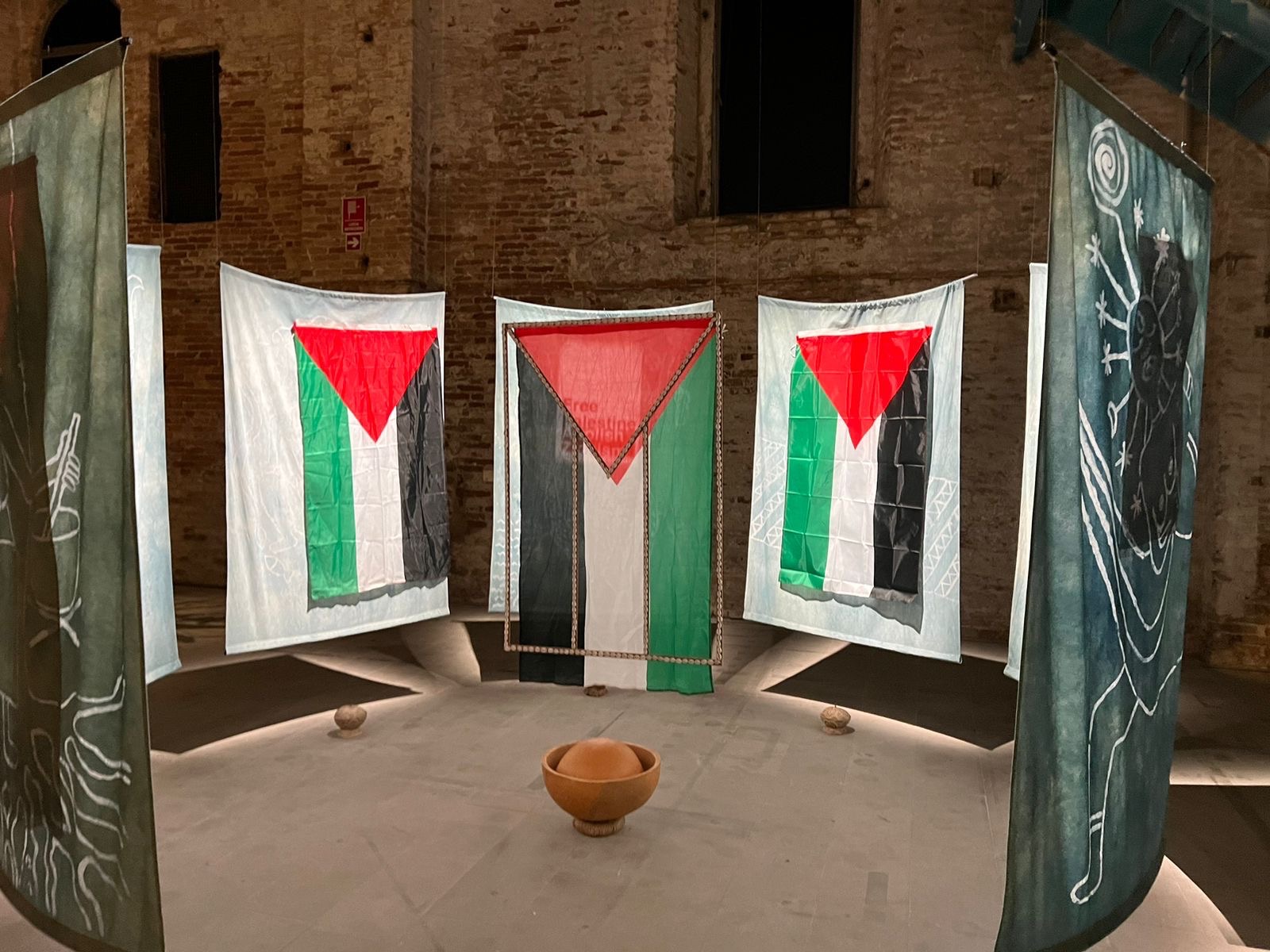
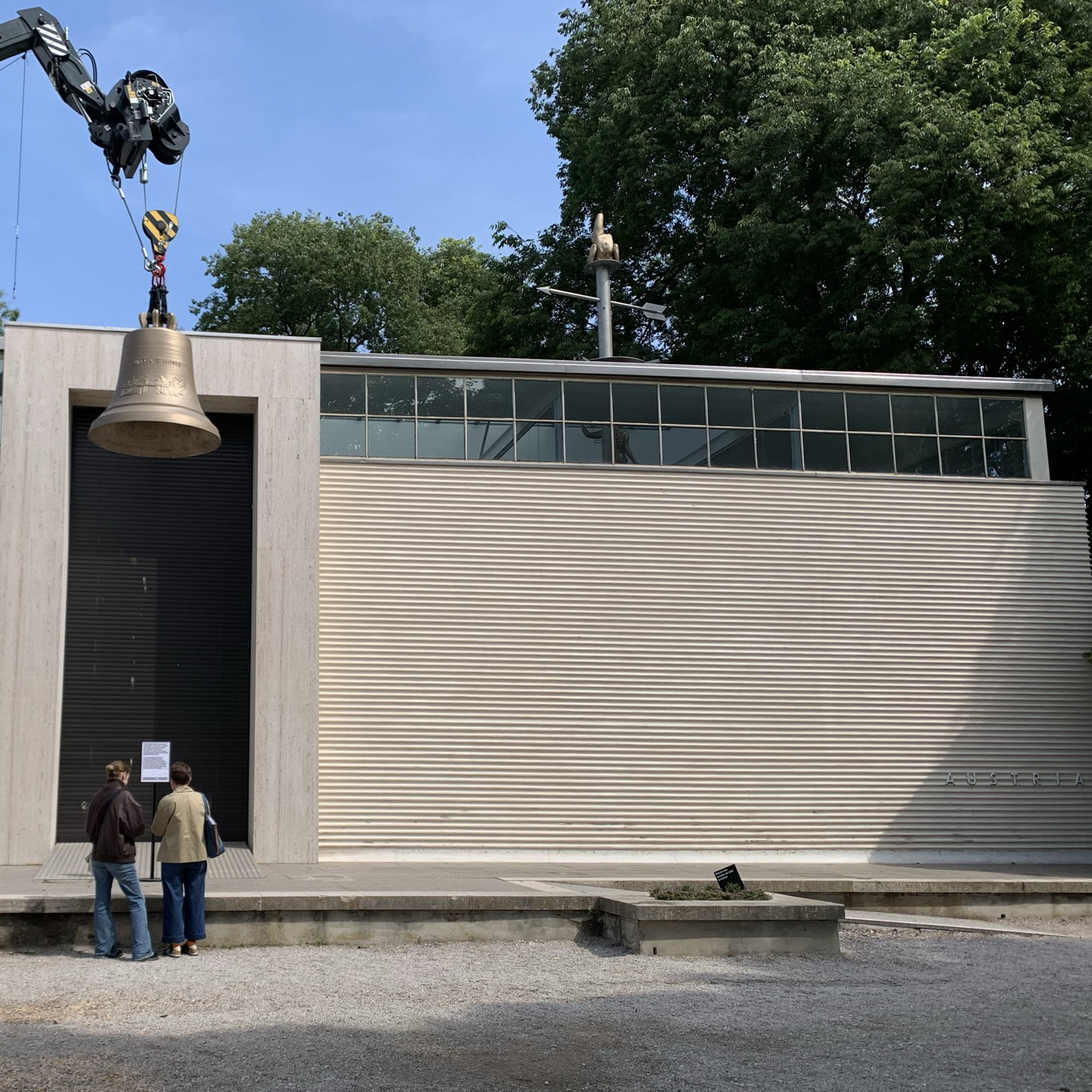
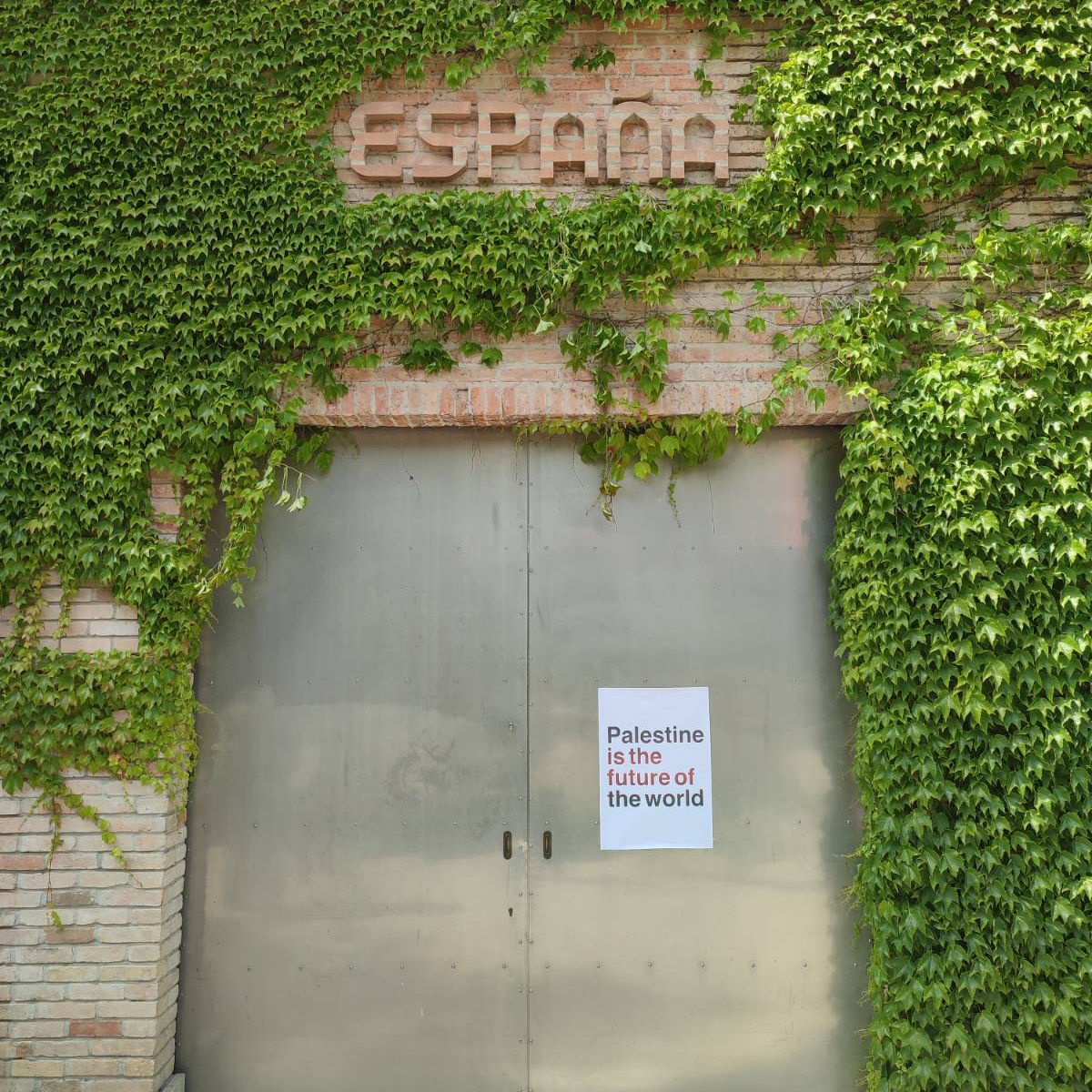
No opening as usual. Strike. 8 May.
A mobilization against the Genocide Pavilion, for Palestine, and for the rights of cultural workers.
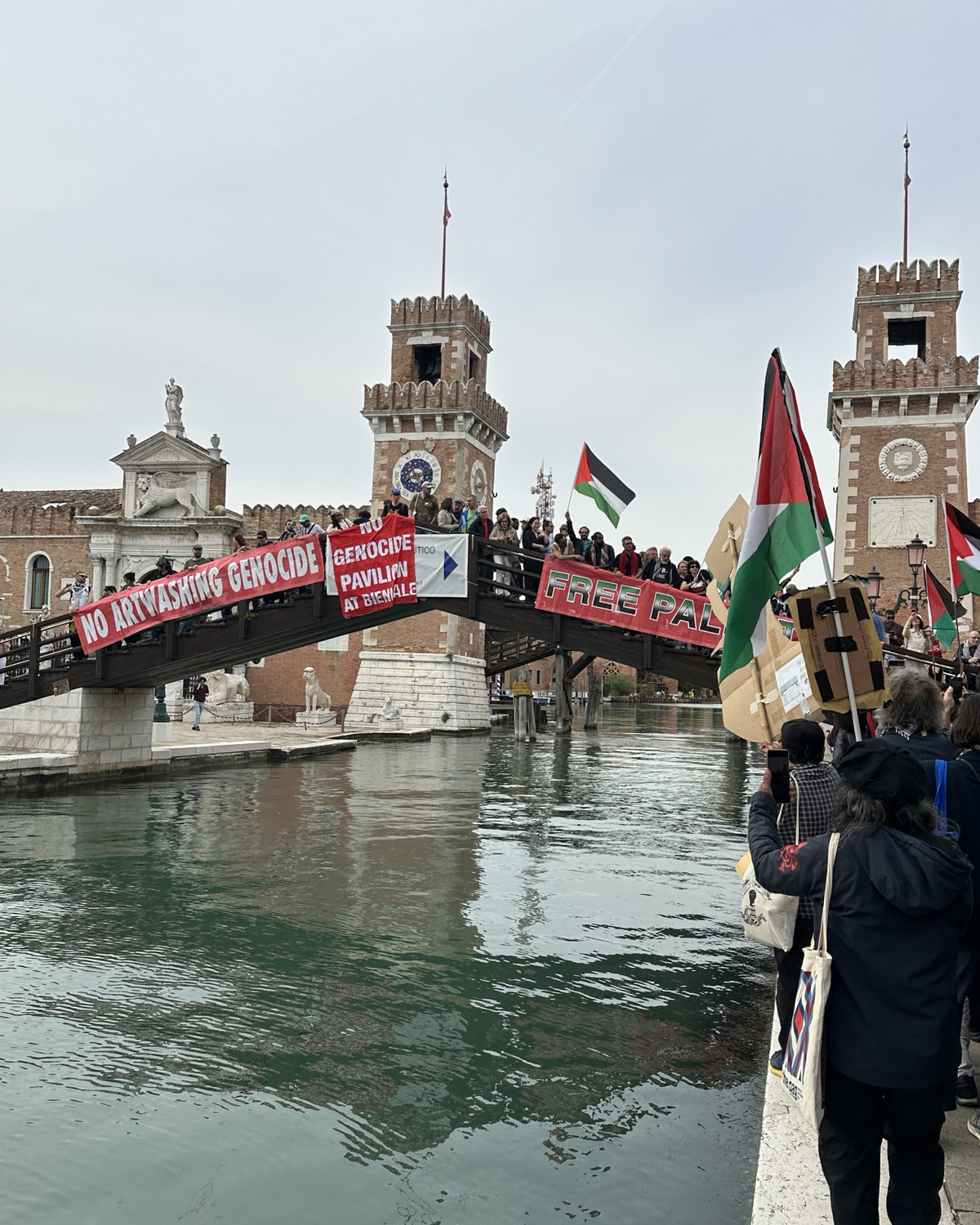
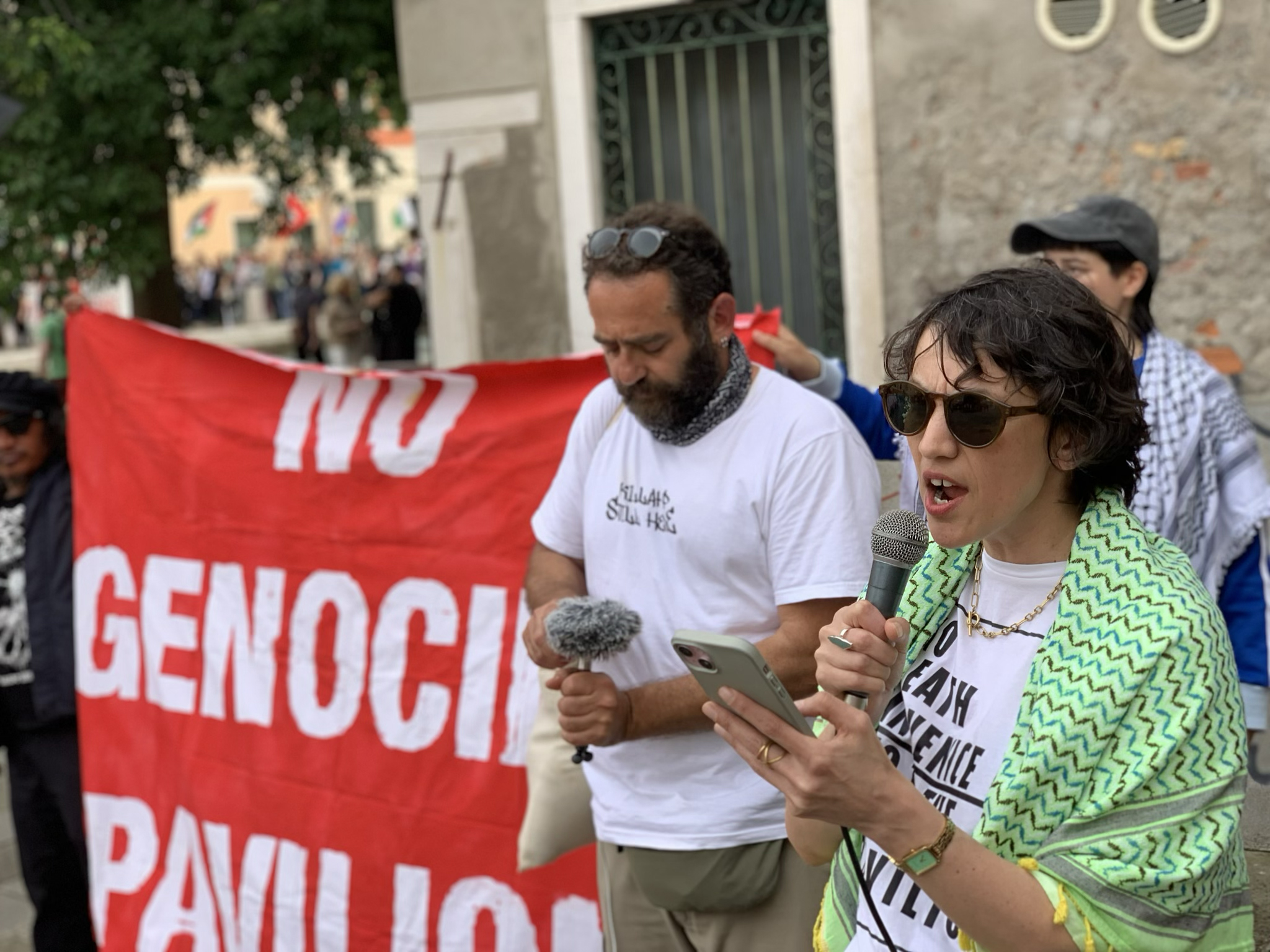
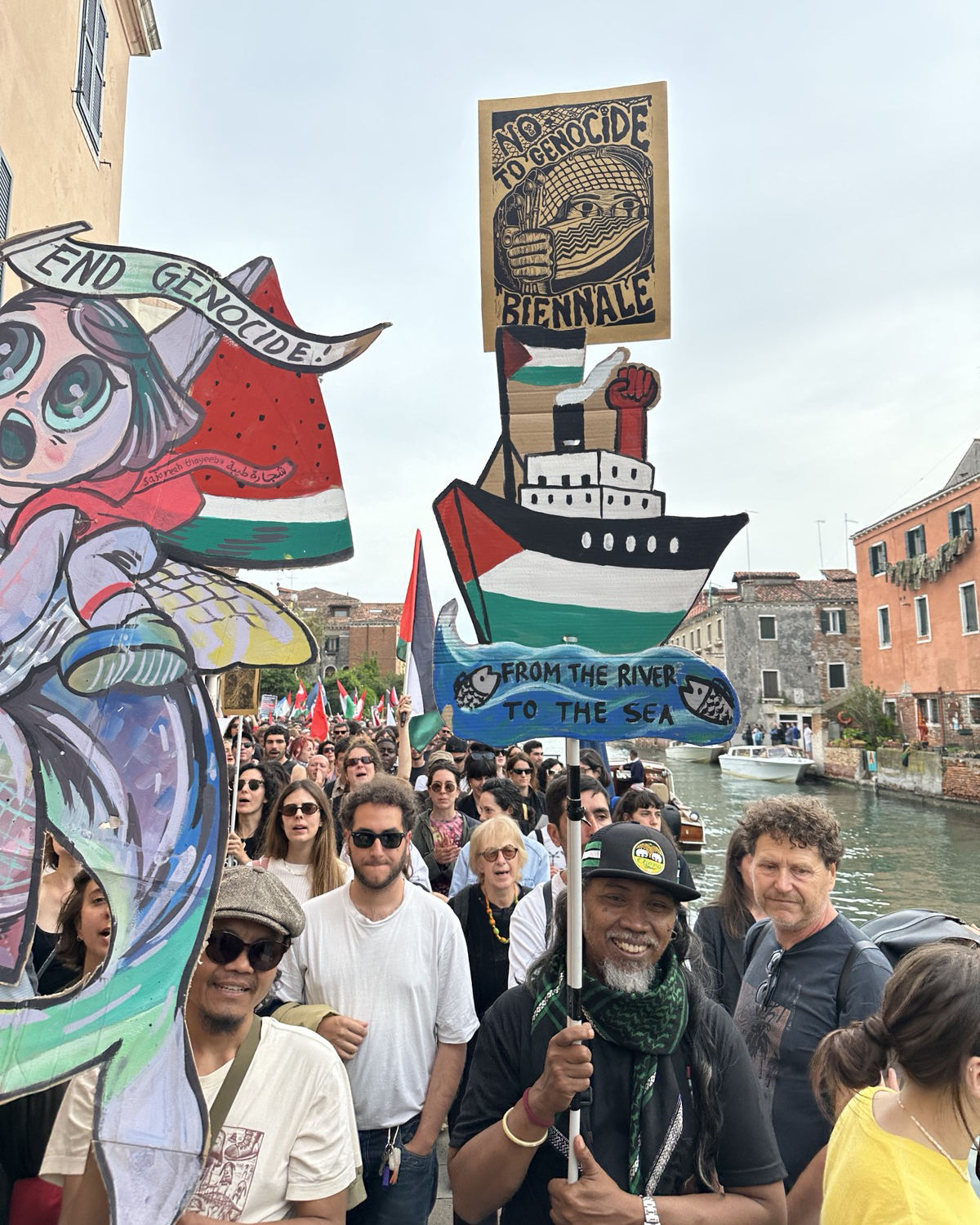
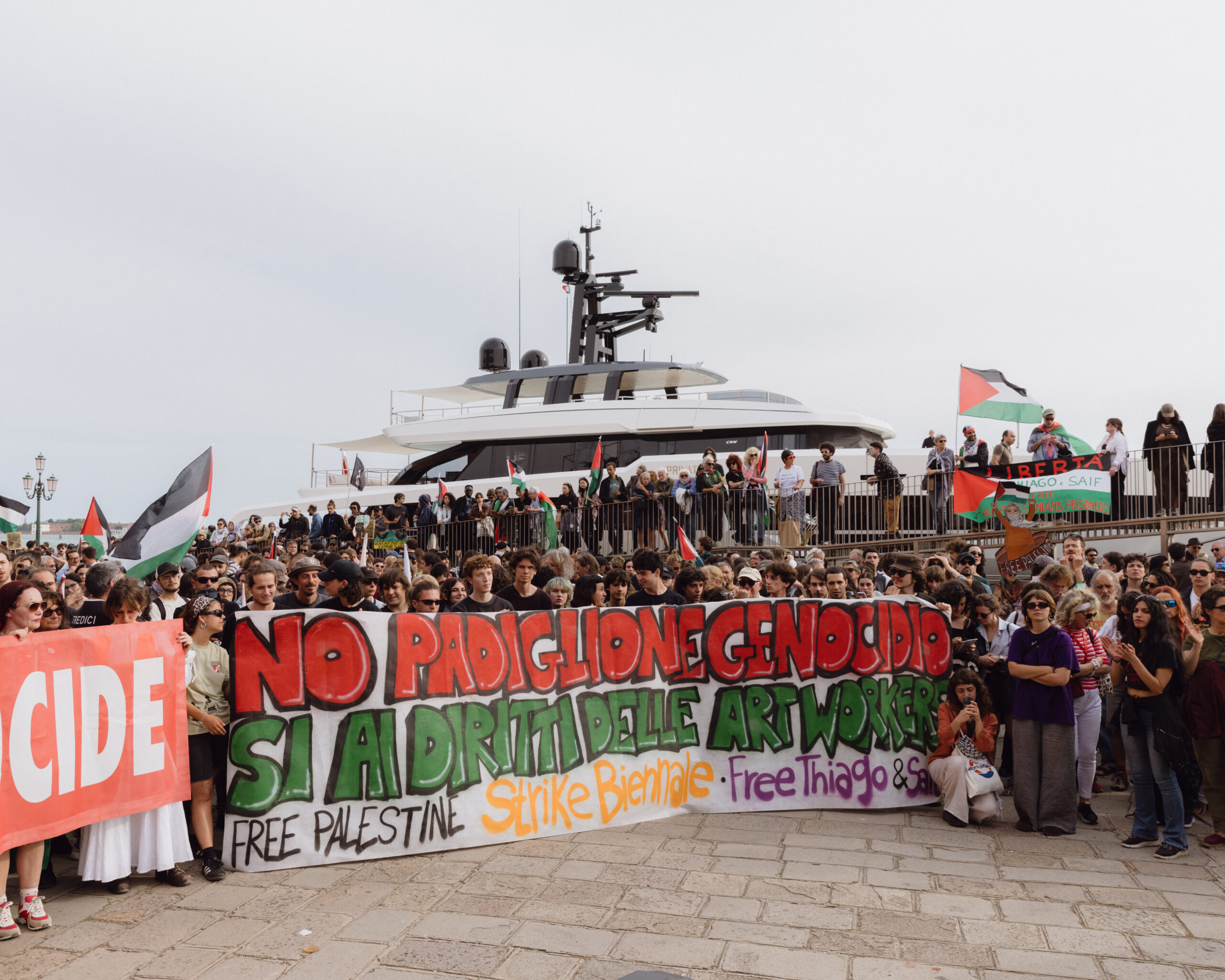
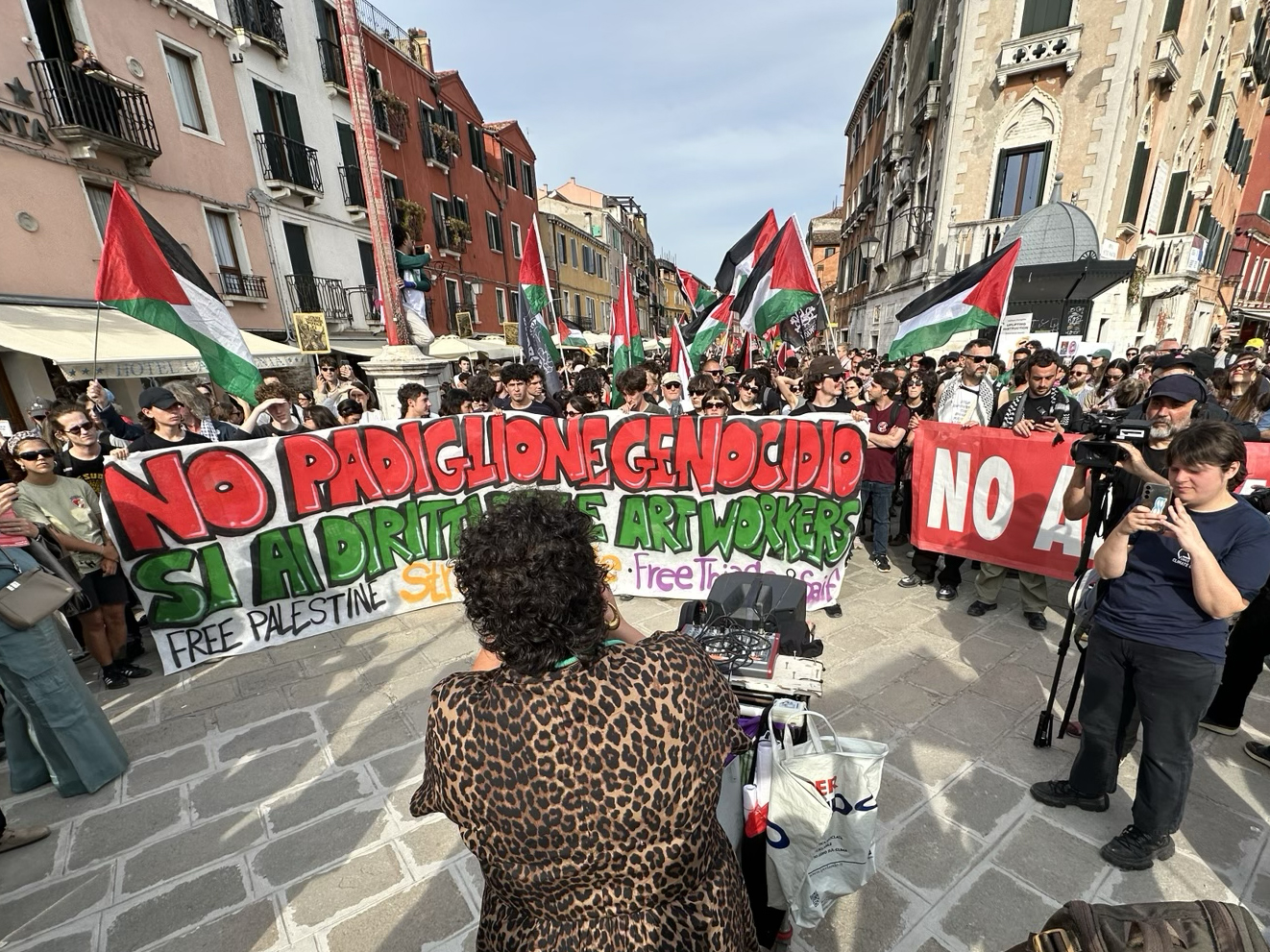
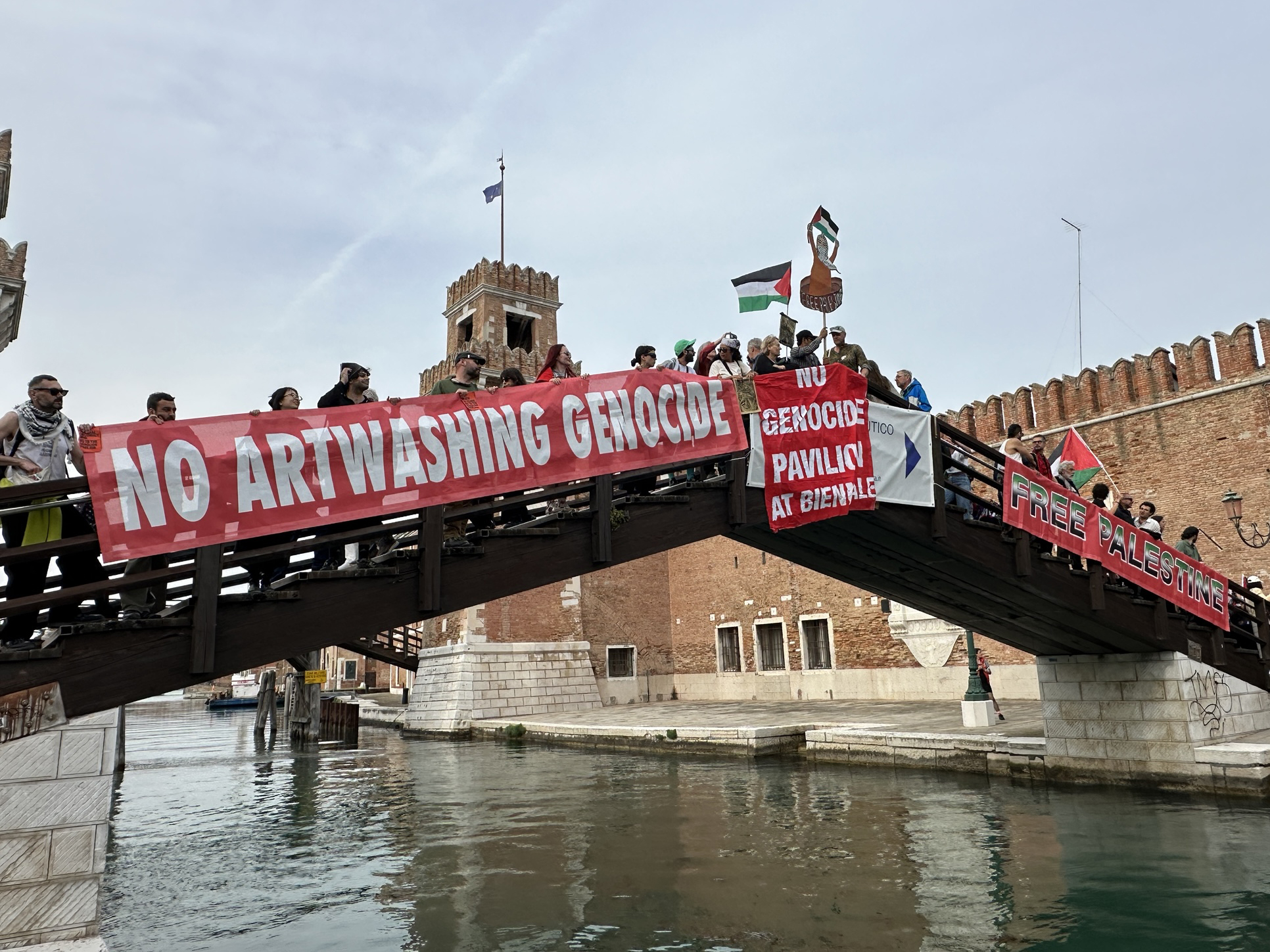
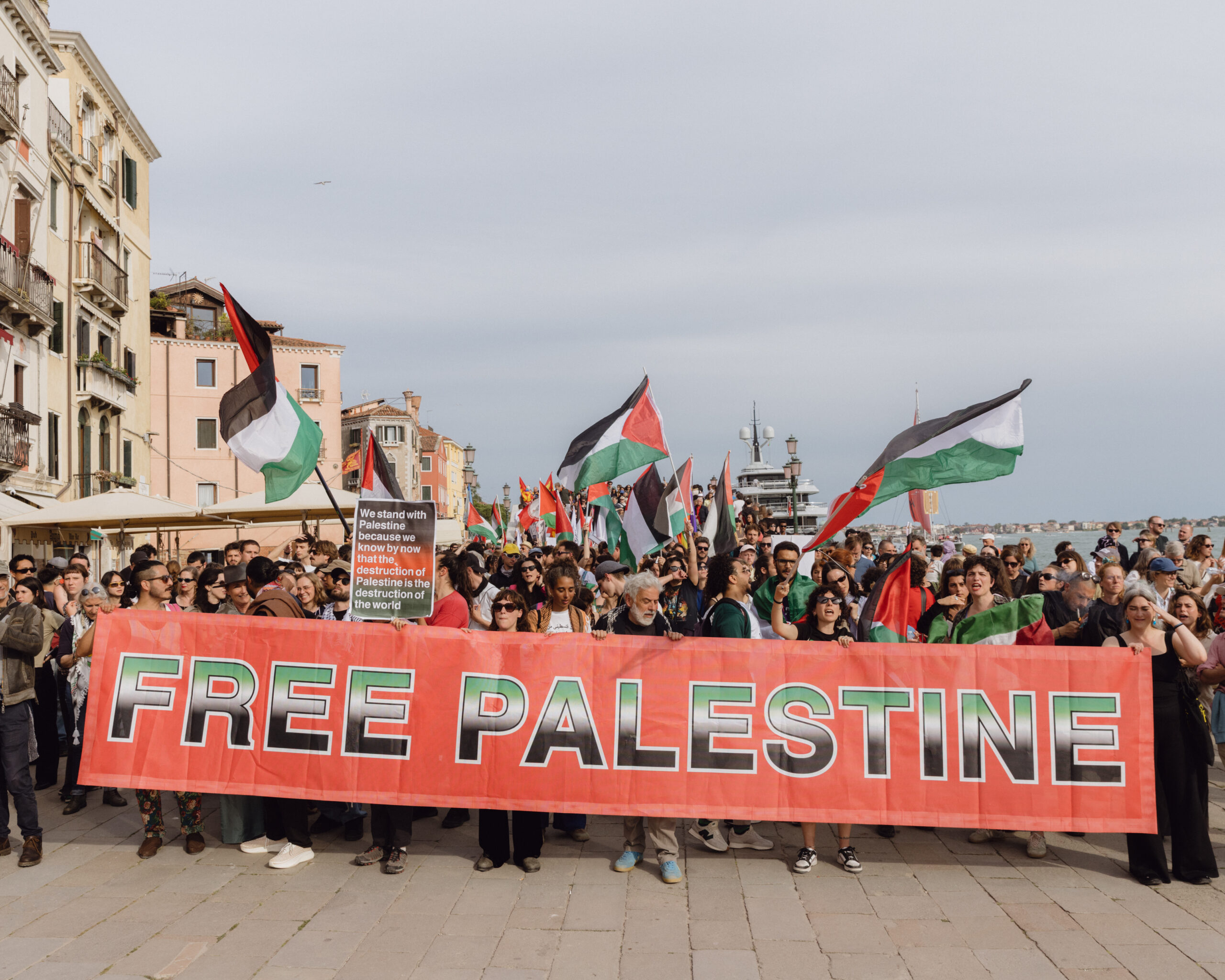
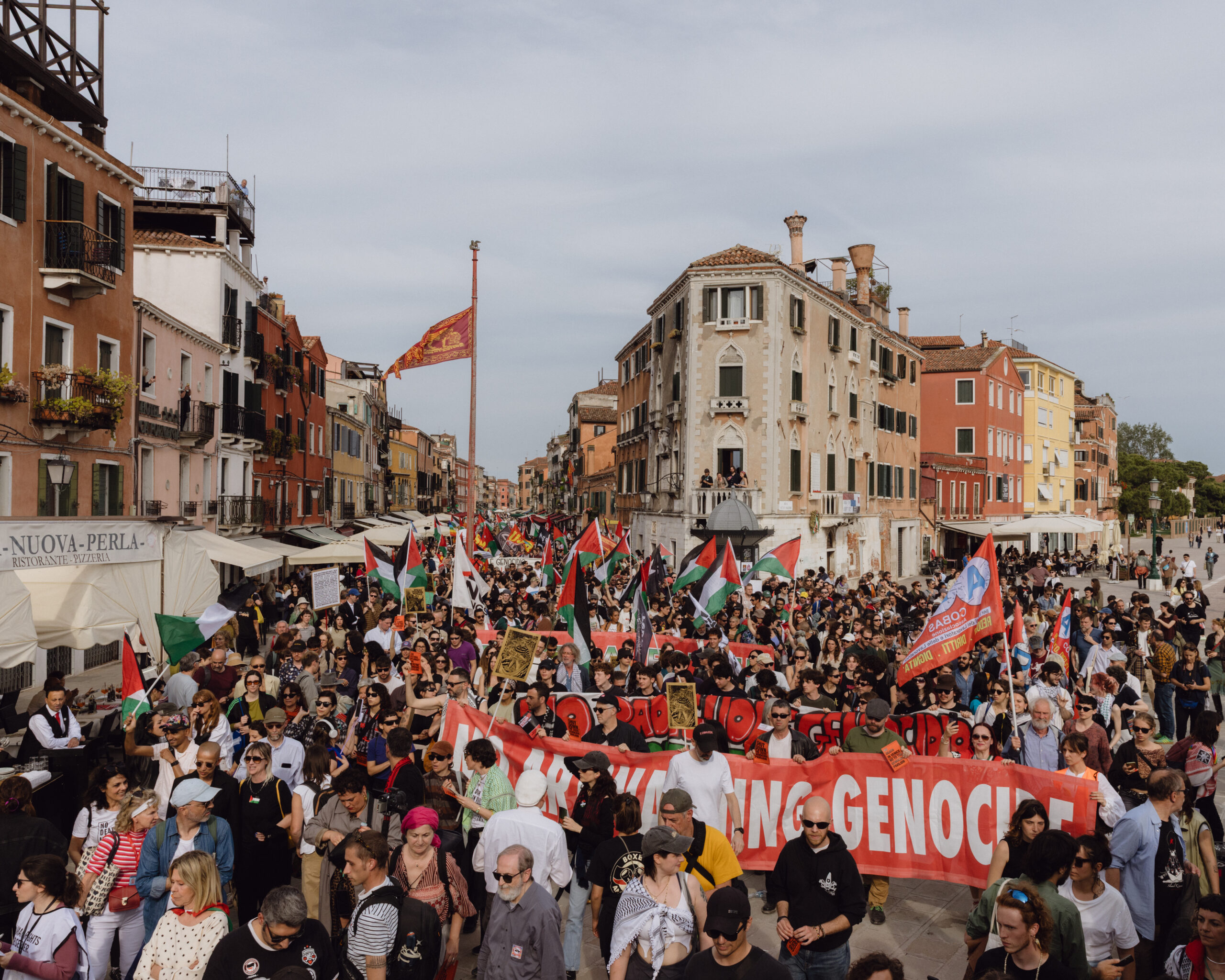
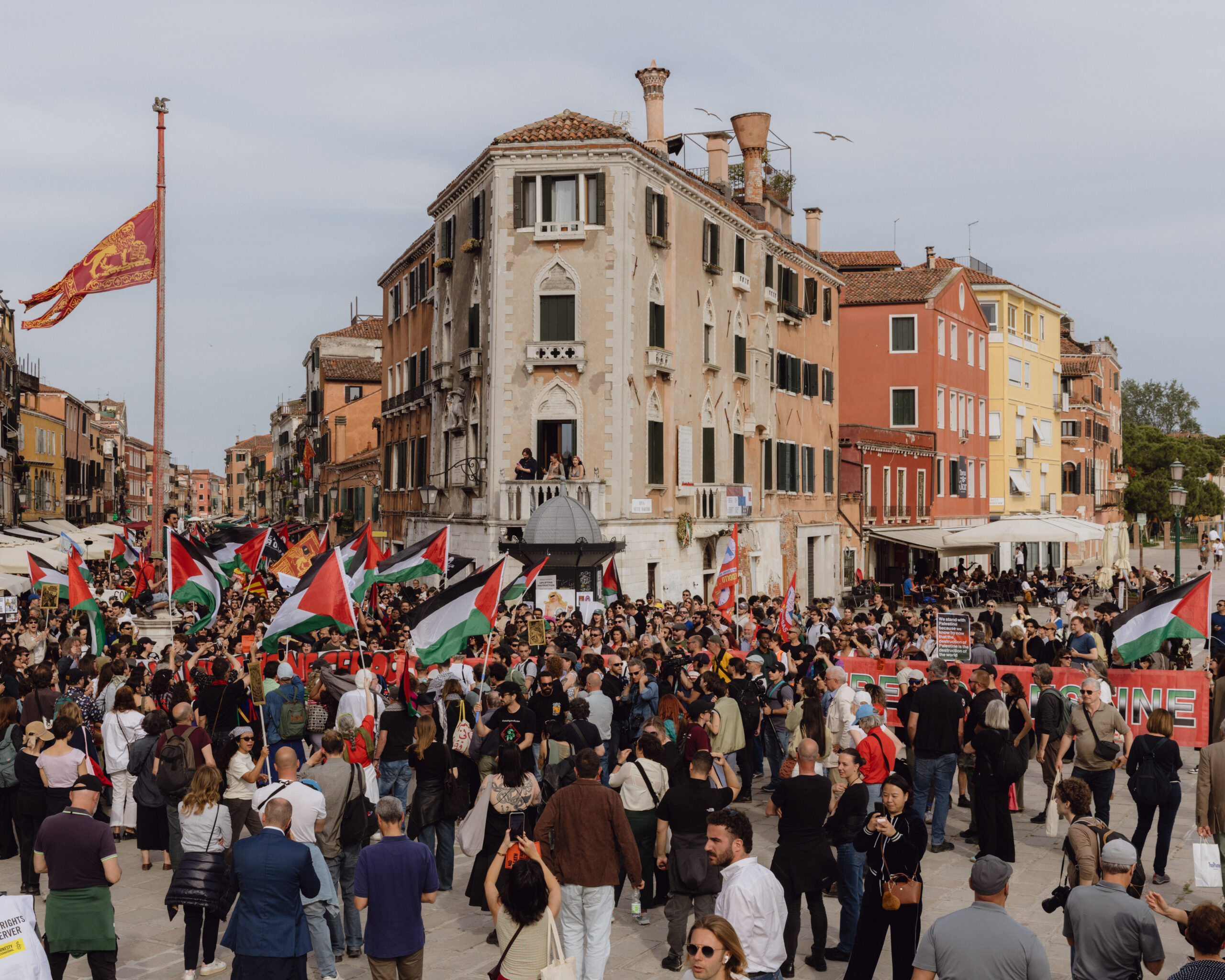
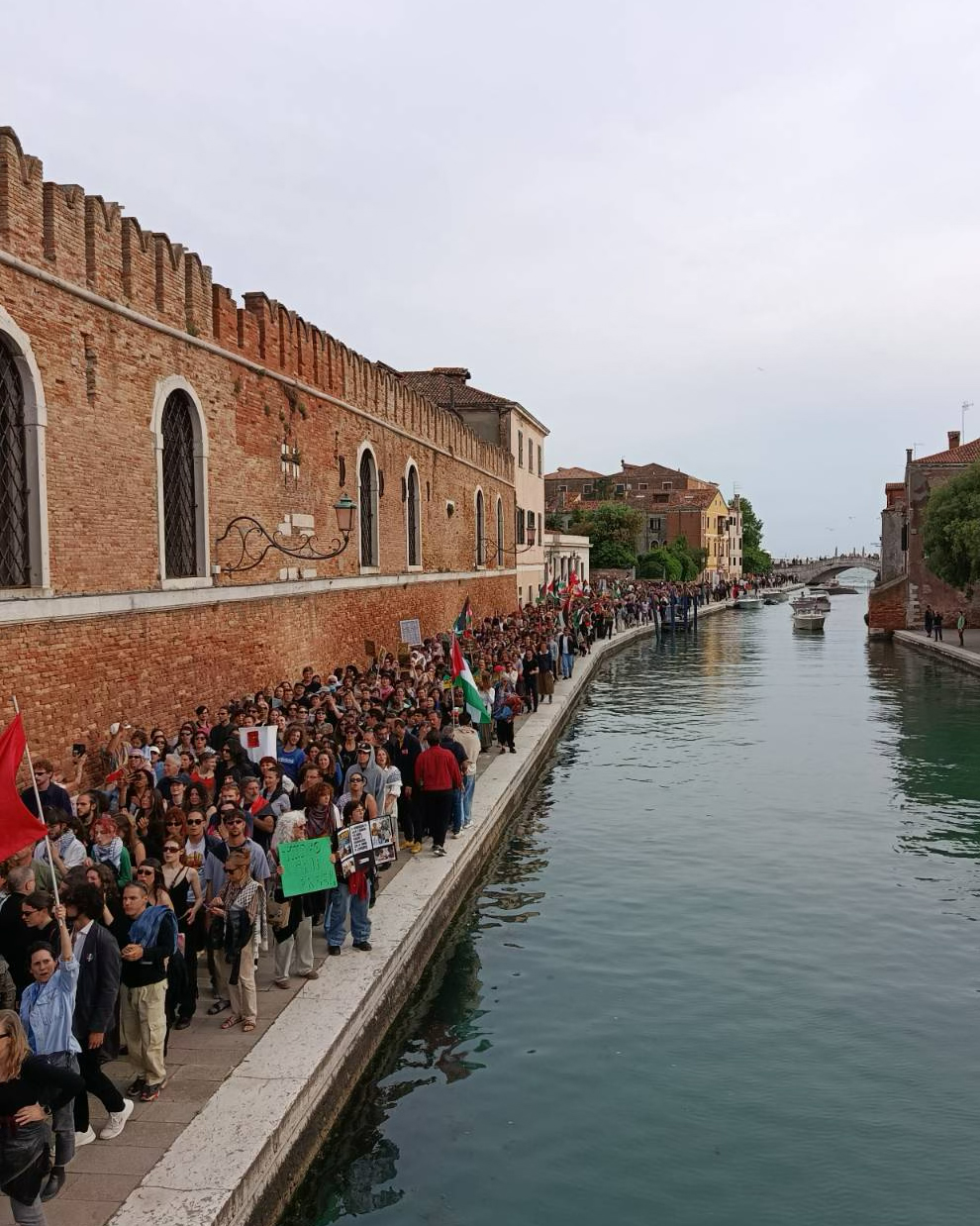
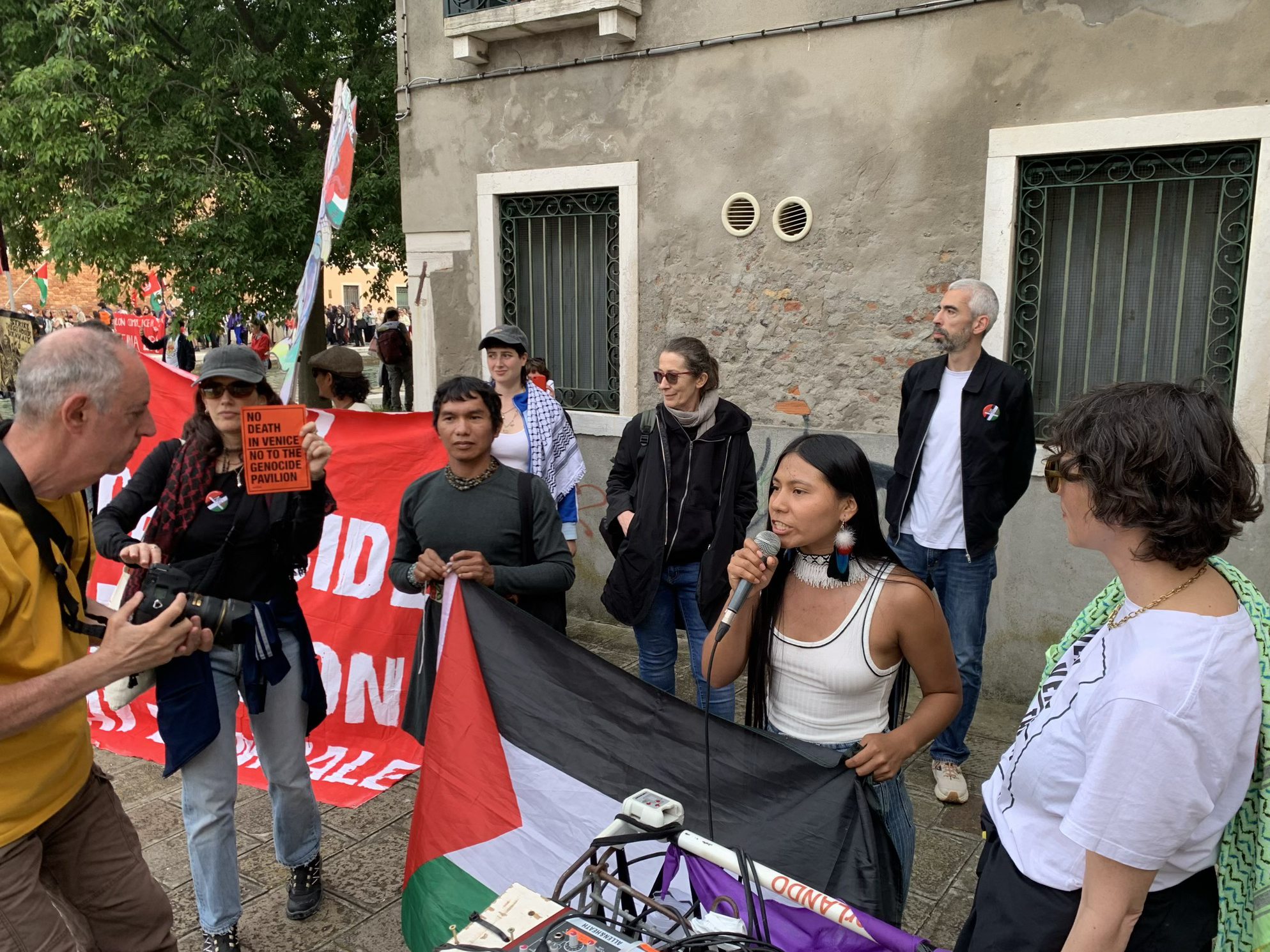
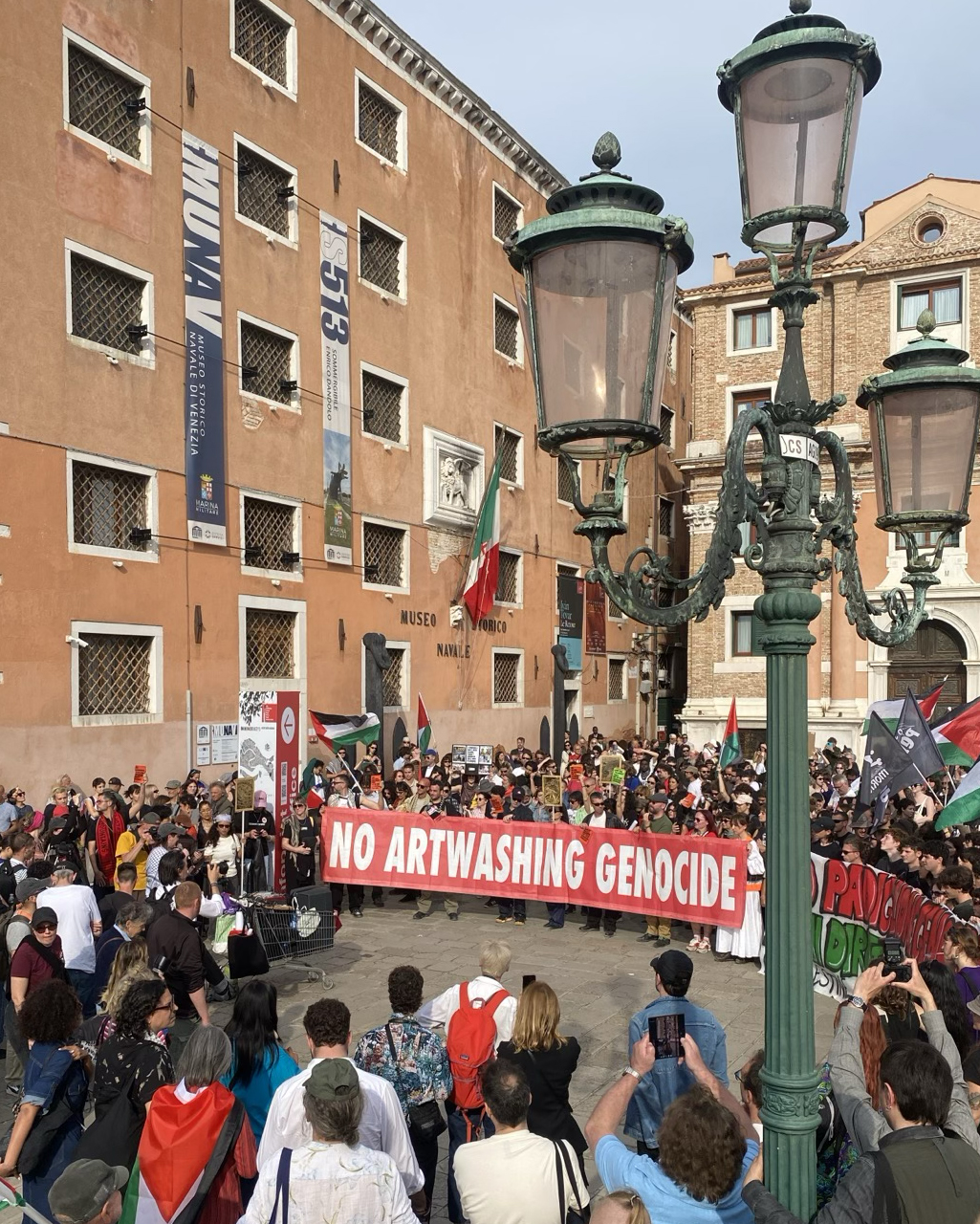
No opening as usual. Strike — May 8, Venice.
We mobilize against the Genocide Pavilion. For Palestine. For the rights of cultural workers.
The genocide has not ended. In Gaza, after the systematic destruction of infrastructure and essential services, Israel continues to exert control and violence.
In the West Bank, expropriation and settler violence are intensifying. The expansion of the conflict across the region — from Lebanon to Iran — further escalates an already devastating war.
And yet, as violence continues, the Biennale keeps offering space and legitimacy to the State of Israel. A clear double standard: international law is invoked for some, suspended for others.
For over two years, as art workers together with ANGA, we have called for the exclusion of Israel — as was done with South Africa during apartheid. We reject artwashing and cultural complicity in violence.
At the same time, we denounce the material conditions of our sector: widespread precarity, inadequate contracts, outsourcing, and lack of protections. The same economy that funds war erodes welfare and rights here as well.
The Biennale is not neutral. It is part of this system. That is why we strike.
Together with unions, Biennalocene, and ANGA, we call on everyone to join.
No opening as usual. Sciopero 8 maggio — Venezia.
Ci mobilitiamo contro il Padiglione Genocidio. Per la Palestina. Per i diritti delle lavoratrici e dei lavoratori della cultura.
Il genocidio non è finito. A Gaza, dopo la distruzione sistematica di infrastrutture e servizi essenziali, Israele continua a esercitare controllo e violenza.
In Cisgiordania, espropri e violenze dei coloni si intensificano. L’estensione del conflitto nella regione, dal Libano all’Iran, aggrava ulteriormente una guerra già devastante.
Eppure, mentre la violenza prosegue, la Biennale continua a offrire spazio e legittimità allo Stato di Israele. Un doppio standard evidente: si invoca il diritto internazionale per alcuni, lo si sospende per altri.
Da oltre due anni, come lavoratrici e lavoratori dell’arte, insieme ad ANGA, chiediamo l’esclusione di Israele — come avvenne per il Sudafrica durante l’apartheid. Rifiutiamo l’artwashing e la complicità culturale con la violenza.
Allo stesso tempo, denunciamo le condizioni materiali del nostro settore: precarietà diffusa, contratti inadeguati, esternalizzazioni, assenza di tutele. La stessa economia che finanzia la guerra erode welfare e diritti, anche qui.
La Biennale non è neutrale. È parte di questo sistema. Per questo scioperiamo.
Uniti a sindacati, Biennalocene e ANGA, chiamiamo tutte e tutti a partecipare.
Download the Strike Action Guide.
Access the full strike statement and FAQ as a downloadable PDF. Share it with artists, cultural workers, institutions, press contacts, and anyone joining the action.
Share the strike document.
Scan or circulate this QR code to send people directly to the strike statement and FAQ.